What greenhouse conditions are best for cardamom?
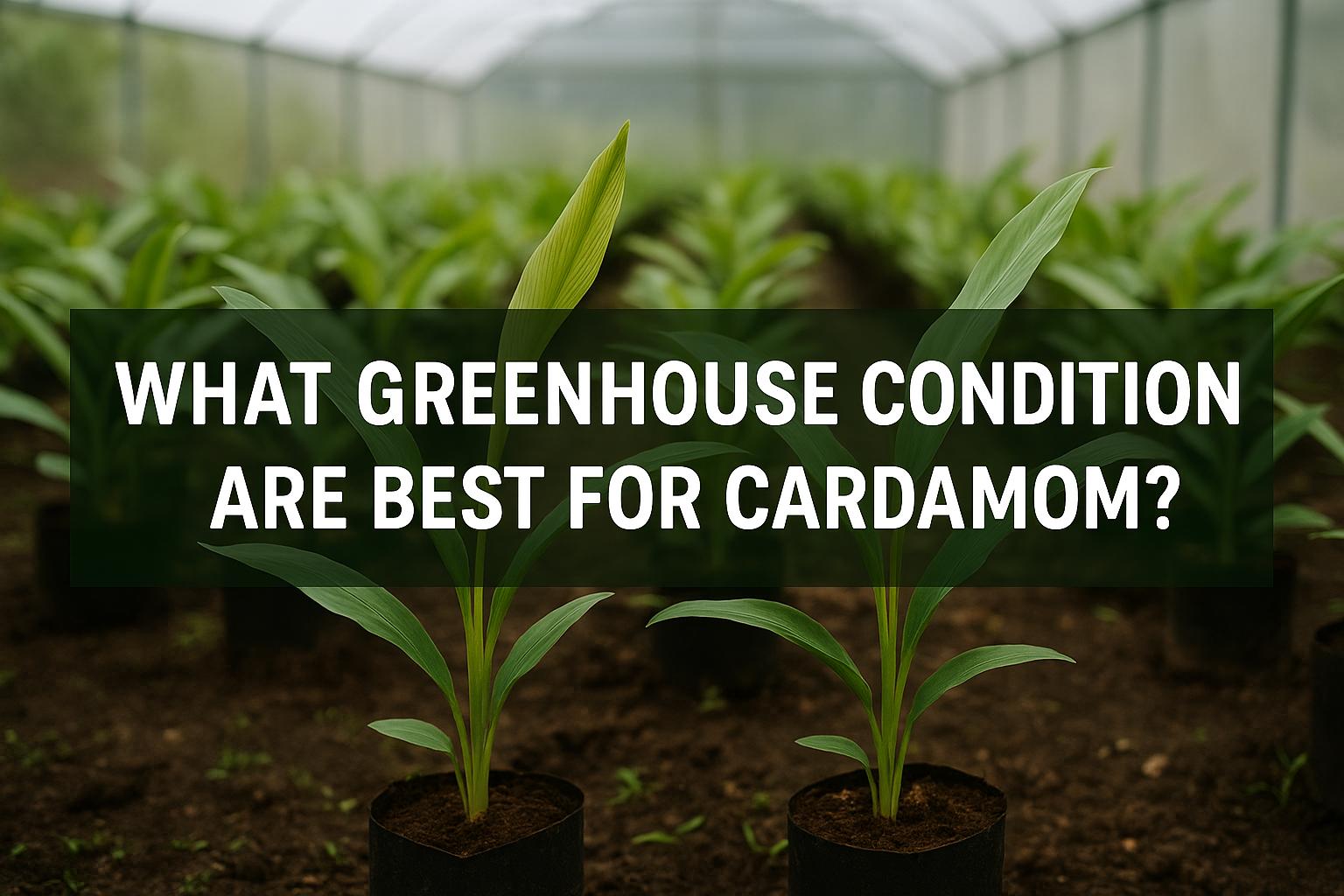
Cardamom grows best in greenhouses with temperatures between 25°C–30°C, humidity levels of 70%–90%, and filtered light using 40%–60% shade nets. The soil should be loamy, slightly acidic (pH 5.5–6.5), and well-drained. Use drip irrigation to maintain consistent moisture, and ensure good ventilation to prevent fungal diseases. Automated systems for temperature, humidity, and CO₂ control help replicate tropical conditions. Raised beds, mulching, organic fertigation, and biological pest control complete the ideal setup.
What is the ideal temperature range for growing cardamom in a greenhouse?
Cardamom grows best in warm, controlled temperatures that mimic its native tropical habitat. Maintaining a stable thermal environment is essential for healthy plant development and continuous pod formation.
- Daytime temperatures between 25°C and 30°C support optimal photosynthesis.
Within this range, the plant maintains steady leaf expansion, enzyme activity, and flower bud development. Temperatures above 35°C may lead to leaf scorching and flower drop. - Night temperatures should stay between 18°C and 22°C to prevent plant stress.
A slight dip in night temperatures helps regulate transpiration and supports respiration without shocking the plant’s metabolism. - Temperature fluctuations must be minimized to avoid flower abortion.
A sudden drop below 15°C or spikes above 35°C can interrupt flowering cycles and stall fruit set. Automated thermal controls are ideal in greenhouse setups. - Greenhouse heating systems are essential in temperate zones.
In colder regions, we install electric or gas heaters with thermostatic controls to keep the greenhouse within the desired temperature band throughout the year. - Shading materials help prevent overheating in warmer months.
We apply 50% shade nets or reflective coatings to maintain cooler internal conditions and prevent sunburn on leaves.
What humidity levels are best suited for cardamom cultivation under greenhouse conditions?
High humidity is vital for cardamom, especially for leaf turgidity, stomatal function, and flowering success. The right balance supports disease resistance and consistent yields.
- Maintain relative humidity between 70% and 90% throughout the growth cycle.
These levels replicate cardamom’s native forest microclimate and promote healthy transpiration rates. Low humidity leads to curled or dry leaf margins. - Use misting systems to maintain uniform moisture levels.
High-pressure foggers or overhead misters can restore evaporated moisture, especially during dry spells or peak summer months. - Install hygrometers at canopy height for accurate monitoring.
This ensures the humidity readings reflect the actual conditions around the plant foliage rather than the general greenhouse air. - Avoid humidity above 95% to reduce fungal disease risk.
Excessive moisture without ventilation creates conditions for leaf blight, collar rot, and damping-off in seedlings. Strategic ventilation balances moisture with airflow. - Create microclimate zones within the greenhouse.
By dividing the greenhouse into humidity-controlled sectors, we cater to varying moisture needs of young seedlings, flowering plants, and mature cardamom.
How much light does cardamom need in a greenhouse, and should shading be used?
Cardamom is a shade-loving plant that performs best under filtered or diffused light conditions. Direct sunlight must be regulated to protect foliage and promote balanced growth.
- Use 40% to 60% shade nets to replicate forest canopy conditions.
This allows sufficient light for photosynthesis while preventing leaf scorching. We adjust the shading based on the season and sun angle. - Provide 8 to 10 hours of indirect light daily.
Cardamom needs moderate light exposure. Insufficient light delays flowering, while too much causes leaf yellowing and stunted growth. - Install grow lights in regions with low natural light.
In temperate zones or during winter months, we use LED grow lights (6500K spectrum) to supplement natural light and ensure plant health. - Avoid placing cardamom in direct southern exposure without shading.
Even inside a greenhouse, southern light can overheat plants during midday, leading to sun stress and reduced productivity. - Rotate pots or trays for even light distribution.
Uneven exposure leads to lopsided growth and flowering bias. Rotating containers weekly ensures balanced leaf development.
What soil composition and pH are optimal for cardamom in greenhouse environments?
Cardamom demands rich, well-drained soil with the right acidity to absorb nutrients and support root development. Soil health directly influences pod quality and plant lifespan.
- Use loamy soil mixed with organic compost for structure and fertility.
The soil must retain moisture yet drain easily. We blend red loam, well-rotted cow dung, leaf compost, and coarse sand in equal parts. - Maintain soil pH between 5.5 and 6.5 for nutrient availability.
This slightly acidic range allows optimal uptake of macronutrients and prevents iron and zinc deficiencies, common in alkaline conditions. - Add coco peat or perlite to improve aeration and root oxygen.
These materials prevent compaction and allow fine roots to spread, which is essential for stable anchorage and water absorption. - Avoid clay-heavy or saline soils that retain excess moisture.
Poor drainage leads to root rot, especially in containerized cardamom plants. Raised beds or bottom-perforated containers improve water movement. - Apply neem cake and bone meal for organic disease control and phosphorus.
These natural amendments suppress nematodes and enhance flowering by providing slow-release nutrients.
How should ventilation and airflow be managed in a greenhouse growing cardamom?
Proper ventilation is essential to balance high humidity with disease prevention and maintain oxygen flow for root and foliar respiration.
- Use side vents and roof vents to promote cross ventilation.
This passive airflow prevents hot air accumulation and regulates humidity naturally. Opening vents during peak humidity hours reduces fungal risk. - Install exhaust fans for forced ventilation in larger structures.
These fans create consistent airflow that keeps the microclimate fresh and discourages pest buildup. They’re vital during summer months. - Avoid strong directional drafts directly on plants.
High-velocity airflow causes dehydration and leaf damage. We position fans to circulate air around—not on—the plants. - Combine ventilation with misting to stabilize humidity without excess wetness.
This balance ensures moist air without leaf wetting, which is a primary cause of mildew and blight in cardamom. - Monitor airflow using anemometers and digital controls.
Sensors help us maintain ideal airspeed (0.2–0.5 m/s) that mimics natural breeze and promotes transpiration without drying the plants.
How often should cardamom be watered in a greenhouse, and what irrigation system is best?
Watering cardamom in greenhouses requires precision to avoid under- or over-irrigation. The goal is to maintain consistent soil moisture without waterlogging.
- Use drip irrigation systems for targeted and consistent moisture.
Drip lines deliver water directly to the root zone, preventing wet foliage and fungal issues. We place emitters near the base of each plant and regulate flow through timers. - Water 3 to 4 times per week depending on humidity and temperature.
In high-humidity weeks, we reduce watering to prevent root suffocation. During hotter periods, we increase frequency to compensate for evapotranspiration. - Maintain soil moisture at 60% to 70% field capacity.
We use tensiometers or moisture sensors to monitor this level. Proper moisture promotes active root absorption and pod formation. - Avoid overhead watering to reduce disease risk.
Cardamom is prone to fungal attacks like leaf spot and damping-off. We strictly avoid sprinklers and use only subsoil or drip methods. - Implement mulching to reduce evaporation and conserve water.
Organic mulch such as dried leaves or coir pith locks in moisture and reduces the irrigation requirement by 20% to 30%. - Use rainwater harvesting where possible for mineral-balanced watering.
Soft, slightly acidic rainwater aligns well with cardamom’s pH needs and reduces salt buildup in the soil compared to hard water sources.
What greenhouse orientation and layout improve cardamom growth and yield?
Greenhouse structure plays a crucial role in light exposure, air movement, and operational efficiency, all of which influence yield quality and consistency.
- Position the greenhouse in a north-south orientation.
This layout ensures uniform light exposure across the day, reducing shadow build-up and promoting even plant growth from end to end. - Design raised beds with a height of 20–30 cm for better drainage.
Raised beds protect root systems from water stagnation. We use stone or plastic lining to reinforce the edges and improve durability. - Maintain at least 1 meter spacing between rows.
Wide spacing facilitates air circulation and provides sufficient access for maintenance and harvesting without damaging roots or stems. - Include central and side paths for efficient movement and drainage.
We use compacted gravel or concrete for walkways, which support water runoff and ease equipment access. - Incorporate removable shade layers for seasonal adjustments.
During winter, we reduce shading to boost light levels. In peak summer, we increase shading to prevent heat stress. - Group plants by growth stage for easier management.
Seedlings, flowering plants, and mature stock require different care. Zoning helps us adjust water, nutrients, and ventilation for each group efficiently.
How can temperature and humidity be controlled automatically for consistent cardamom conditions?
Automation ensures stability in cardamom’s sensitive growing environment. Modern systems allow real-time response to environmental fluctuations.
- Install climate control panels with integrated sensors.
These systems monitor and adjust temperature, humidity, and light levels continuously, sending alerts when thresholds are breached. - Use automated misting systems to control humidity.
Misters activate when relative humidity drops below 70%, maintaining stable moisture levels without over-saturating the air. - Connect heaters and ventilation fans to thermostats.
When temperatures dip below 18°C or rise above 30°C, the system activates heating or exhaust fans automatically to restore balance. - Use real-time data logging for trend analysis.
We track climate patterns to predict plant responses and schedule interventions such as pest control or fertilization during optimal windows. - Integrate smartphone or cloud-based monitoring tools.
These tools allow remote adjustments, especially useful during off-hours or emergencies when in-person supervision isn’t possible. - Include fail-safe systems and backup generators.
In case of power outages, automated systems switch to secondary energy sources to prevent drastic climate shifts that could damage plants.
What role does CO₂ enrichment play in the greenhouse growth of cardamom?
Supplemental CO₂ enhances photosynthesis, especially in sealed or semi-closed greenhouse systems where natural air exchange is limited.
- Maintain CO₂ levels between 800–1,200 ppm during daylight hours.
This range significantly increases the rate of photosynthesis, improving leaf growth, flowering, and pod size. - Use CO₂ generators or compressed gas tanks with regulators.
We install CO₂ release systems synced with fans and light schedules to deliver enrichment only when plants are photosynthetically active. - Increase ventilation during enrichment to avoid CO₂ stagnation.
Without proper air movement, CO₂ can accumulate unevenly or displace oxygen near the root zone, which can stress plants. - Combine CO₂ enrichment with optimal lighting and nutrients.
CO₂ benefits are maximized only when light intensity and nutrient availability are not limiting. We align enrichment sessions with fertigation and light peaks. - Avoid enrichment during night hours.
Photosynthesis does not occur in the dark, so additional CO₂ at night offers no benefits and may disrupt greenhouse gas balance.
What type of greenhouse flooring and drainage is ideal for cardamom production?
Flooring and drainage systems must support healthy root zones, minimize standing water, and reduce contamination risks.
- Use perforated concrete or interlocking pavers with sub-drainage.
These allow water to percolate quickly and channel into underground drains, keeping the root environment dry and clean. - Elevate beds above floor level to prevent waterlogging.
Raised beds with sloped bases encourage gravity-assisted drainage and protect roots from fungal exposure. - Install central drain lines connected to covered sumps.
We place drain channels along the greenhouse length, covered with mesh to prevent blockages from mulch, soil, or debris. - Apply gravel or geotextile under grow bags or containers.
This improves water runoff while preventing weed growth or soil erosion around the base. - Ensure slight flooring slope (1–2%) toward drainage lines.
Proper sloping supports natural flow of excess water and eliminates puddles that invite pests and disease. - Avoid bare soil floors that encourage weeds and disease spread.
Exposed soil becomes compacted, harbors fungi, and disrupts moisture control. We cover walkways with weed mat or crushed stone.
How can mulching benefit cardamom plants in a controlled greenhouse setting?
Mulching provides multiple benefits in greenhouse cardamom cultivation by protecting soil structure, conserving moisture, and improving plant health.
- Mulch reduces evaporation and conserves soil moisture.
By covering the soil, mulch prevents direct sun exposure and reduces water loss, keeping the root zone consistently hydrated without over-irrigation. - Organic mulch helps regulate soil temperature.
Materials like dried leaves, straw, or coir pith form an insulating layer that protects roots from heat fluctuations and supports steady growth. - Mulch suppresses weed growth around the plant base.
Dense coverage blocks light from reaching weed seeds, reducing competition for water and nutrients while minimizing the need for herbicides. - Decomposing mulch adds organic nutrients to the soil.
As mulch breaks down, it enriches the soil with essential elements like nitrogen, enhancing microbial activity and soil fertility. - It prevents soil compaction and improves aeration.
Mulch reduces the impact of watering and human activity on the soil surface, allowing better oxygen flow to the roots. - Mulch acts as a natural barrier against soil-borne diseases.
It limits splashing during irrigation, which is a major vector for fungal spread to leaves and stems.
What fertilization and nutrient delivery methods work best for greenhouse cardamom farming?
Cardamom is a nutrient-demanding crop, and its yield depends on balanced feeding strategies that provide both macro and micronutrients consistently.
- Use fertigation systems to deliver nutrients through irrigation.
This method ensures even distribution of water-soluble fertilizers at the root zone and minimizes nutrient wastage or leaching. - Apply balanced NPK fertilizers with a higher potassium ratio during fruiting.
A formulation like 15:15:20 supports vegetative growth early on and promotes pod formation as the plant matures. - Supplement with organic inputs such as compost tea and vermiwash.
These natural fertilizers enhance microbial life, support slow nutrient release, and reduce chemical dependency. - Conduct periodic leaf and soil tests to monitor deficiencies.
Every 4–6 weeks, we test for micronutrient imbalances and apply boron, zinc, or magnesium as needed to support flowering and chlorophyll production. - Use slow-release granules for base fertilization and liquid feeds for correction.
Granules maintain a stable nutrient baseline, while foliar sprays or liquid feeds can be used for rapid correction. - Apply biofertilizers like Azospirillum and Phosphobacteria for root enhancement.
These promote root colonization, improve nutrient solubility, and support overall plant resilience under greenhouse stress.
How should pests and diseases be managed in greenhouse-grown cardamom?
Cardamom is vulnerable to several pests and fungal infections, especially in humid greenhouse environments. Integrated control methods ensure crop health without overusing chemicals.
- Implement Integrated Pest Management (IPM) protocols.
We combine physical, biological, and cultural practices such as regular scouting, use of beneficial insects, and crop rotation to prevent outbreaks. - Monitor with sticky traps and visual inspections.
Yellow and blue sticky traps catch flying pests like aphids and thrips. Weekly scouting helps us identify infestations early and act quickly. - Introduce natural enemies such as ladybugs and predatory mites.
These biological control agents reduce pest populations without affecting beneficial microbes or pollinators. - Use neem oil and garlic-chili sprays for organic pest deterrence.
These non-toxic repellents are effective against soft-bodied insects and can be applied without harming the crop. - Maintain hygiene by removing plant debris and cleaning tools.
Fungal spores and insect eggs often survive on dead leaves or contaminated equipment. Regular sanitation limits spread. - Ensure adequate airflow and avoid overwatering to prevent fungal issues.
Leaf blight, rhizome rot, and collar rot are common in stagnant, moist conditions. Controlled ventilation keeps these threats in check.
How is pollination managed for cardamom plants grown inside greenhouses?
Cardamom requires effective pollination to develop viable pods. In greenhouses, we must either replicate natural pollination or provide manual assistance to ensure seed set.
- Introduce stingless bees or bumblebees into the greenhouse.
These insects are excellent pollinators and operate effectively in enclosed spaces, transferring pollen as they move flower to flower. - Schedule flowering zone visits for manual pollination.
Using soft brushes, we gently transfer pollen from the anther to the stigma to mimic insect activity, especially in smaller greenhouses or during cold weather. - Maintain moderate humidity during flowering to encourage pollen viability.
High moisture can cause pollen clumping or fungal growth, so we slightly reduce misting during peak bloom periods. - Group plants by flowering stage to concentrate pollination efforts.
This targeted layout helps maximize success, as bees or manual efforts can focus where they are most needed. - Avoid pesticide applications during flowering periods.
Even organic sprays can deter pollinators. We apply all necessary treatments well before or after blooming phases.
Can tropical microclimates be recreated in greenhouses located in temperate zones for cardamom?
Yes, cardamom can be successfully cultivated in non-native regions by mimicking its tropical environment using controlled greenhouse technologies.
- Install heaters, humidifiers, and shade systems to replicate tropical conditions.
These devices maintain essential temperature (25–30°C) and humidity (70–90%) levels year-round, regardless of external climate. - Use double-layered polycarbonate or polyethylene greenhouse covers.
These materials provide insulation and reduce heat loss, making them ideal for maintaining internal warmth in cold climates. - Automate misting and ventilation to mimic rainforest air moisture.
Programmable controllers manage air saturation and air circulation, simulating the natural conditions of South Asian cardamom forests. - Supplement with LED grow lights during low-sunlight months.
In winter, we extend light exposure to meet the plant’s photosynthetic needs and prevent growth delays. - Choose dwarf or semi-dwarf cardamom varieties for small-scale temperate setups.
These types adapt better to greenhouse constraints and require less vertical space while still producing high-quality pods. - Incorporate thermal curtains or underground heating systems for winter insulation.
These additions help stabilize night temperatures and prevent frost damage to sensitive tropical foliage.
Ideal Greenhouse Conditions for Growing Cardamom
Cardamom thrives in greenhouse environments that mimic subtropical shade forests. Key needs include high humidity, filtered light, and loamy soil. For optimized yields in greenhouses, buy green cardamom for protected environment farming.
For greenhouse kits tailored to herbal or floral tea production, get Thai cardamom for controlled-climate spice farming.
Conclusion
Growing cardamom in a greenhouse requires replicating its tropical habitat with precision. From maintaining ideal temperature and humidity to managing airflow, soil health, and pollination, every detail matters in maximizing yield and quality. Greenhouses offer the flexibility to cultivate cardamom even in non-tropical regions, provided growers adopt the right climate control, irrigation, and crop care practices.
At ABIE Cardamon, we apply these best-in-class greenhouse methods to ensure our cardamom remains fresh, potent, and farmed under optimal conditions. When you choose us, you’re guaranteed:
- Top-quality cardamom sourced from controlled environments
- Discreet packaging and tracking with every order
- Overnight delivery across the USA and Canada
- 5–7 day international shipping
- 100% satisfaction guarantee and a 30-day refund or replacement policy
Order now from ABIE Cardamon — where precision cultivation meets premium quality.
Creating the Perfect Greenhouse for Cardamom Cultivation
Cardamom thrives in greenhouses that maintain 60–80% humidity, filtered light, and a consistent temperature of 18–28°C. Proper ventilation and moisture regulation prevent fungal diseases while encouraging flowering and pod development. For indoor alternatives, visit Can cardamom be grown in vertical farming setups?—a solution for climate-restricted zones.
To scale operations for exports, read How should I manage a cardamom plantation? to combine traditional and modern growing methods.
For optimal post-harvest planning, check How do I cure cardamom for better quality?. Greenhouse cultivation allows better control over the full lifecycle.