Is cardamom suitable for intercropping with other spices?
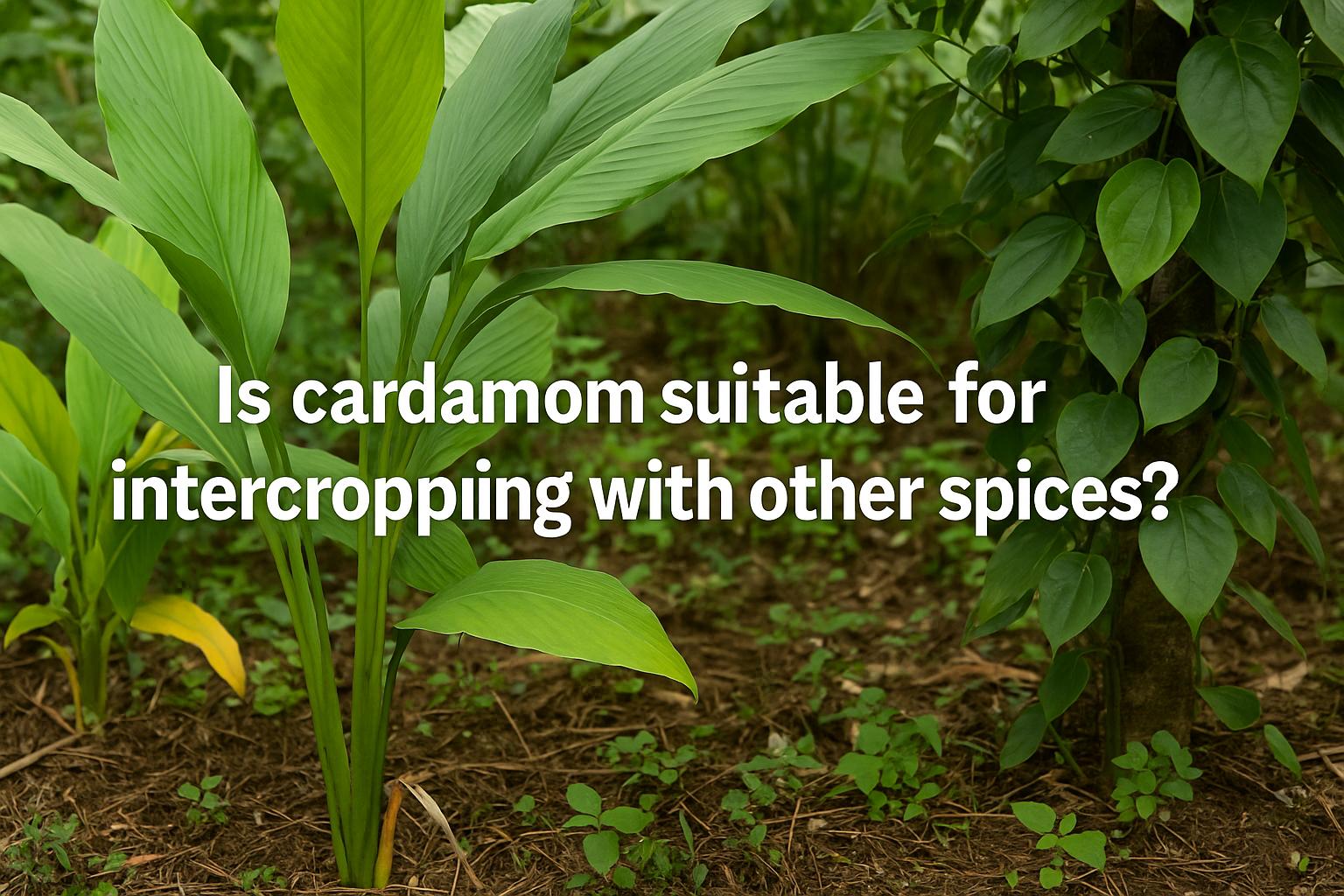
Yes, cardamom is suitable for intercropping with other spices such as turmeric, ginger, clove, and cinnamon. It thrives under filtered shade and has a shallow root system, making it compatible with non-invasive, shade-loving crops. When managed with proper spacing, nutrient balance, and seasonal planning, intercropping cardamom enhances land productivity, soil health, and overall farm profitability without compromising pod yield or quality.
What are the most compatible spice crops to intercrop with cardamom?
Several spices grow well alongside cardamom, provided they meet light, moisture, and root compatibility requirements.
- Turmeric (Curcuma longa) is highly compatible due to its shade tolerance and short growth cycle. It grows well under cardamom canopy, helps suppress weeds, and adds organic residue to the soil post-harvest. It requires moderate water, making it ideal for co-cultivation.
- Ginger (Zingiber officinale) complements cardamom in both growth pattern and marketing cycle. Though it demands more nutrients, it shares a similar climate profile and can be harvested before peak cardamom flowering, minimizing resource overlap.
- Black pepper (Piper nigrum) uses vertical space by climbing on support trees, such as silver oak or erythrina, without competing directly with cardamom. This vertical layering maximizes space use and income.
- Clove (Syzygium aromaticum) and cinnamon (Cinnamomum verum) offer both shade and long-term return. As tree crops, they create a stable canopy for cardamom while diversifying economic output through high-value bark and buds.
- Nutmeg (Myristica fragrans) can also be considered for upper canopy shade in high rainfall zones, although it needs more spacing to avoid over-shading the cardamom layer.
- Avoid aggressive or sun-dependent crops like chili or lemongrass, which require more direct sunlight and can disrupt the humidity balance cardamom depends on.
- Coriander, cumin, and fenugreek are unsuitable due to their dry-season growth cycle and preference for open-sun conditions, which are incompatible with cardamom’s shaded and humid environment.
What are the benefits of intercropping cardamom with other spices?
Intercropping cardamom with the right spices improves both environmental sustainability and economic return.
- Maximizes land productivity and profitability. By growing two or more marketable spices on the same land, farmers get multiple harvests and revenue streams per growing cycle. This is especially valuable in small plots where space is limited.
- Improves soil fertility through diverse organic inputs. Leaf litter from turmeric and ginger contributes to humus formation. Their decaying roots improve microbial activity and enhance nutrient cycling in the soil.
- Reduces weed growth and suppresses soil erosion. Ground-level crops create a living mulch that blocks weed emergence, reducing herbicide dependency and labor costs. On sloped land, their root systems help bind soil.
- Enhances pest and disease resistance through crop diversity. A varied cropping system makes it harder for pests or pathogens to spread, creating a form of biological defense that protects the cardamom.
- Distributes market risk across crops. When market prices fall for one spice, income from the companion crop can help stabilize earnings. This resilience is crucial in fluctuating global spice markets.
- Improves microclimatic balance. Companion crops maintain humidity and buffer temperature extremes, which helps protect the delicate cardamom capsules from sunscald or desiccation.
- Reduces dependency on chemical fertilizers and pesticides. A biodiverse farm system naturally supports ecological balance, making organic and sustainable farming more feasible and cost-effective.
How does cardamom respond to intercropping with shade-loving spices?
Cardamom responds positively when intercropped with well-matched shade-loving spices, especially when managed with attention to plant spacing, light penetration, and root interaction.
- Cardamom maintains yield under filtered light provided by taller companion crops. Spices like clove or cinnamon form a semi-permeable canopy that reduces direct sun exposure while allowing sufficient light for photosynthesis.
- Intercrops such as turmeric act as ground cover, conserving soil moisture. These crops reduce surface evaporation, critical in dry spells or during post-rainy season transitions.
- Ginger and turmeric complement cardamom’s humidity needs. Their dense foliage creates a localized humid microclimate, ideal for cardamom’s flower and pod development.
- When properly spaced, these shade-loving crops reduce weed competition. Shaded intercropping eliminates light availability for invasive weeds, reducing the need for weeding.
- Poorly managed shade can lead to fungal outbreaks. If intercrops grow too densely, they may block airflow and retain moisture excessively, increasing the risk of diseases like damping-off and capsule rot. Ventilation must be planned.
- Balanced canopy architecture is critical for light diffusion. Regular pruning of upper canopy trees and rotation of annual intercrops helps maintain ideal light intensity for cardamom.
- Soil drainage should be ensured. Even shade-compatible intercrops can lead to water stagnation if not planted with proper raised bed or trench systems. Cardamom is highly sensitive to waterlogging.
Can cardamom be intercropped with turmeric without reducing yield?
Yes, turmeric is one of the most well-documented and compatible intercrops for cardamom, with field data showing that yield loss is avoidable under good agricultural practices.
- Turmeric shares similar shade and moisture requirements with cardamom. It thrives in 30–50% filtered shade and prefers well-drained loamy soil—conditions identical to what cardamom needs.
- Turmeric has a compact growth habit that minimizes competition. It does not overshadow cardamom or compete aggressively for sunlight, making it ideal for mid-row planting.
- Harvest timing differs, reducing overlap stress. Turmeric is typically harvested 8–9 months after planting, before the cardamom flowering peak. This minimizes nutrient and water competition during cardamom’s critical reproductive stage.
- Turmeric contributes to soil health post-harvest. Its rhizome residue and decomposed leaves enhance soil microbial life and organic content, which benefits subsequent cardamom cycles.
- Field studies in the Western Ghats confirm economic and yield benefits. Data from plantations in Kerala show that cardamom-turmeric combinations can increase overall farm returns by 20–35% annually without yield compromise.
- Turmeric suppresses weeds, especially in early growth stages. Its broad leaves and fast canopy formation prevent the establishment of invasive species, reducing maintenance costs.
- To avoid nutrient depletion, integrate organic manures and compost. Regular application of farmyard manure (FYM) and biofertilizers ensures both crops receive adequate nutrition throughout their cycles.
Is it profitable to intercrop cardamom with ginger on the same farm?
Yes, intercropping cardamom with ginger can be highly profitable when nutrient management, spacing, and disease control are carefully planned.
- Ginger is a high-value crop with strong global demand. Its market price often exceeds that of turmeric, making it a valuable intercrop when paired with a premium spice like cardamom.
- It shares similar climate requirements, such as high humidity and filtered shade. Ginger prefers 50–60% shade, rich organic soil, and warm temperatures, all of which overlap with cardamom’s needs.
- Ginger’s harvest period allows it to complement cardamom cycles. Ginger is harvested after 7–9 months, which coincides with or follows cardamom flowering, reducing direct stress on shared soil resources.
- Its deeper root system draws nutrients from different soil layers. This minimizes direct nutrient competition and allows for more effective soil utilization.
- Profitability improves through value-added processing. Fresh ginger can be processed into dried slices, powder, or essential oils, offering higher margins. These same buyers often trade cardamom, simplifying marketing.
- Careful disease control is necessary. Ginger is prone to rhizome rot (Pythium spp.), which can spread in overly moist conditions. Raised bed planting, drainage ditches, and crop rotation help prevent outbreaks.
- Organic nutrient inputs are essential to balance high demands. Ginger is a heavy feeder. Compost, neem cake, and bone meal can provide sustained nutrition without harming the cardamom plants.
- Mulching benefits both crops. Applying dry leaves and organic mulches reduces evaporation, regulates temperature, and improves rhizome development while protecting cardamom roots from surface heat.
How does cardamom intercropping affect overall soil health?
Cardamom-based intercropping systems can significantly improve soil quality when managed using conservation practices.
- Increased biodiversity improves soil microbial activity. Different spice roots exude various compounds that attract beneficial microbes, enriching the soil’s biological life and nutrient conversion processes.
- Organic residues from companion spices enhance humus content. Leaf fall and rhizome remains from crops like turmeric or ginger decompose naturally, increasing soil carbon and fertility.
- Soil structure is enhanced through mixed root systems. Deep roots from tree crops like cinnamon and intermediate roots from ginger break up compacted layers, improving aeration and water infiltration.
- Reduced erosion on sloped plantations. Ground-covering intercrops prevent topsoil runoff during heavy rains, preserving fertile topsoil in high-rainfall areas where cardamom is often grown.
- Natural weed suppression limits herbicide use. Intercrops shade the soil, discouraging weed growth and reducing the need for chemical weeding, which helps preserve microbial populations.
- Leguminous intercrops (when used) can fix atmospheric nitrogen. Although less common in cardamom systems, short-term legumes like cowpea or french bean can be rotated between spice cycles to improve soil nitrogen levels.
- Intercropping enhances nutrient cycling. The presence of different crops ensures balanced uptake and return of minerals, preventing localized depletion of phosphorus, potassium, or micronutrients.
- Soil pH remains stable with organic amendments. Regular application of green manure and composted intercrop biomass prevents acidification common in monoculture spice farming.
Which agroclimatic zones favor cardamom intercropped with spices?
Cardamom-spice intercropping thrives in specific tropical agroclimatic zones that provide high humidity, rainfall, and filtered shade.
- Tropical highland regions between 600 to 1,500 meters elevation. These areas offer cool temperatures and frequent rain, which are ideal for both cardamom and spices like ginger, turmeric, and clove.
- Regions with 1,500–4,000 mm annual rainfall. High rainfall supports the water-demanding nature of cardamom and its companion crops while enabling minimal irrigation requirements.
- The Western Ghats (India) are the most prominent zone. States like Kerala, Karnataka, and Tamil Nadu lead in integrated spice farming, with well-documented success in cardamom intercropping.
- Sri Lanka’s central hills provide similar conditions. The humid hill country supports multi-tiered spice farming with cardamom, pepper, and cinnamon.
- East African highlands such as Ethiopia and Uganda. These emerging cardamom-growing zones offer fertile volcanic soils, moderate temperatures, and natural forest cover suitable for intercropping.
- Andean regions of Colombia and Peru (for export-focused spice farms). Experimental intercropping projects in these regions show strong adaptation when tropical agroforestry models are used.
- Well-drained loamy soil is essential across zones. Regardless of location, drainage is a key factor—waterlogged clay or sandy soils are unsuitable for cardamom systems.
How does intercropping cardamom influence its quality and essential oil content?
When well-managed, intercropping does not reduce cardamom quality; it can even enhance pod flavor and oil yield under optimal conditions.
- Proper shade from intercropped trees helps maintain oil integrity. Direct sunlight degrades volatile oils. A shaded environment keeps pod temperatures low, preserving oil content during development.
- Soil fertility from decomposed intercrop residue enhances pod aroma. High organic matter contributes to the complex volatile compound profile in cardamom, improving its sensory value.
- Intercrops like turmeric increase potassium levels in the soil. Potassium is crucial for oil biosynthesis in cardamom. Natural inputs from turmeric breakdown enrich this mineral without synthetic fertilizers.
- Improved humidity from intercrops benefits capsule filling. Moist air promotes healthy seed development and pod swelling, critical for high-grade cardamom.
- Competition stress must be minimized. If nutrient demands are not met, cardamom pods may be smaller and contain less oil. Balanced nutrient application is essential.
- Pest and disease stress can lower oil quality. Healthy intercrop systems reduce pest load, preventing the biochemical degradation of essential oils caused by insect damage.
- Harvest timing remains critical. Even in intercropped fields, delayed harvesting due to labor overlap with other crops may affect oil concentration, so synchronization of labor resources is necessary.
- Shade calibration is necessary. Excessive shade may lead to poor flower induction and low capsule set, affecting both quantity and quality of output. Regular pruning of intercrop canopy trees is required.
What pest and disease challenges arise from intercropping cardamom with spices?
Intercropping introduces both protective and risk elements in pest and disease management.
- Root rot (Pythium spp., Fusarium spp.) is a concern with ginger. These pathogens thrive in wet soil. If intercrops like ginger are overwatered or poorly drained, fungal infections can spread to cardamom roots.
- Overcrowding increases risk of capsule rot (Phytophthora spp.). Reduced airflow under dense crop systems can trap moisture, creating ideal conditions for this fungal disease. Proper spacing and canopy thinning help mitigate this.
- White grubs and nematodes may migrate across crops. Soil-dwelling pests can attack multiple spice roots if crop rotation or organic deterrents aren’t used. Neem cake and marigold trap planting are preventive options.
- Mixed planting can confuse some pests but attract others. While biodiversity disrupts specialist pests, polyphagous insects like shoot borers or aphids may exploit multiple host plants. Monitoring is essential.
- Intercrops may act as alternate hosts for viruses. If any of the companion spices host mosaic or streak viruses, the vectors (like thrips or aphids) may spread to cardamom. Use certified disease-free planting material.
- Integrated Pest Management (IPM) becomes more effective in intercrops. Biological control agents such as Trichoderma, Pseudomonas, or parasitoid wasps thrive in diverse agroecosystems, enhancing natural pest control.
- Crop rotation and sanitation are essential. Intercrop fields should not be continuously cultivated with the same crops every year. Alternate with legumes or fallow periods to break pest cycles.
- Avoid pesticide overuse. Some intercrops may require more chemical protection. Applying broad-spectrum pesticides can destroy beneficial insects, worsening pest issues. Use targeted, crop-specific interventions only.
Can cardamom be successfully intercropped with clove or cinnamon?
Yes, cardamom can be successfully intercropped with clove or cinnamon, both of which are long-term tree crops that provide natural shade and market value.
- Clove and cinnamon trees offer ideal canopy cover for cardamom. Their medium-height structure and semi-perennial leafing pattern provide the 40–60% filtered light that cardamom requires for healthy growth.
- Both species grow well in similar climates as cardamom. These trees prefer high humidity, frequent rainfall (1,500–3,500 mm), and fertile loamy soils, matching the agroclimatic needs of cardamom plantations.
- They generate long-term income streams. Clove begins yielding after 6–8 years, while cinnamon bark can be harvested every 2–3 years. Intercropping allows early income from cardamom while waiting for the trees to mature.
- They are deep-rooted, reducing underground competition. Their root systems draw nutrients from subsoil layers, allowing cardamom, which has a shallow fibrous root system, to absorb topsoil nutrients without conflict.
- Cinnamon bark residue contributes organic matter. When trimmed, cinnamon leaf and bark waste can be composted and returned to the soil, enriching fertility for both crops.
- Clove flowers release natural aromatic compounds (like eugenol). These compounds may have mild pest-repelling effects, adding a layer of integrated pest management.
- Spacing must be well-designed to prevent excessive shade. A recommended spacing is 6–8 meters between tree rows, with cardamom planted in between. This ensures enough light, air, and access for both crops.
- Drainage is essential. While these trees tolerate wet conditions, cardamom is highly susceptible to waterlogging. Raised beds and slope alignment help ensure water moves away from root zones.
How do water and nutrients get shared in a cardamom-spice intercropping system?
In intercropped fields, water and nutrients are shared vertically and laterally among species, making balanced management critical for sustained yields.
- Cardamom is a shallow-rooted crop. It draws water and nutrients from the top 30–40 cm of soil. Companion crops must not aggressively deplete this zone to avoid competition.
- Tree intercrops utilize deeper soil profiles. Clove and cinnamon access water from subsoil layers, which helps reduce competition and allows layered nutrient extraction.
- Turmeric and ginger also use the upper soil but in a staggered way. When timed well, their nutrient uptake peaks at different times than cardamom’s flowering and fruiting stages, reducing overlap.
- Organic amendments are vital to maintaining nutrient availability. Applying farmyard manure (FYM), compost, and vermicompost helps replenish nutrients used by multiple crops.
- Mulching retains surface moisture and reduces runoff. Dry leaves, coir pith, and grass mulch protect the root zone of all crops, particularly during dry months, while slowly releasing nutrients.
- Targeted fertilization based on crop need is essential. For example, ginger may need more potassium during rhizome swelling, while cardamom requires nitrogen and magnesium for capsule development. Split application prevents imbalance.
- Drip irrigation allows precise water delivery. This system ensures each crop receives the required moisture without waste or root zone saturation, which is key for preventing fungal infections in cardamom.
- Soil testing should be done annually. A nutrient profile helps balance fertilization plans and avoid depletion, especially in continuous intercropping systems.
What row spacing is ideal for cardamom when intercropped with other spices?
Correct spacing is crucial for maximizing yield, maintaining plant health, and ensuring ease of management in intercropped systems.
- Cardamom should be spaced at 2 meters between rows and 1.5–2 meters between plants. This allows for sufficient canopy development and root spread while leaving room for intercrops in between.
- Turmeric and ginger can be planted between cardamom rows. A spacing of 30–45 cm between turmeric plants and 20–30 cm for ginger ensures minimal crowding and adequate access to light.
- Clove or cinnamon trees should be spaced 6–8 meters apart. This wide spacing provides a filtered canopy that benefits cardamom while allowing room for light penetration and airflow.
- In sloped areas, align rows along the contour. This reduces erosion and improves water retention across the root zones of all crops.
- Raised beds improve spacing efficiency and drainage. Especially in heavy rainfall zones, raised planting rows help avoid water stagnation around cardamom.
- Access paths must be planned. Leave 0.8–1 meter-wide paths between rows or blocks for harvesting, spraying, and checking disease status without damaging crops.
- Vertical integration with vines like black pepper can utilize trellis space. Supporting pepper on trees or poles along the boundary adds yield without affecting the spacing of the main crops.
How can seasonal crop planning support cardamom-spice intercropping success?
Seasonal crop planning aligns crop cycles for optimal resource use, pest control, and harvest timing, ensuring harmony across intercropped systems.
- Coordinate planting schedules to minimize resource conflict. For example, ginger and turmeric should be planted early in the monsoon so they reach maturity as cardamom enters flowering.
- Harvest short-duration crops before cardamom peaks. Removing turmeric or ginger before October allows more light and nutrients for cardamom fruiting without disruption.
- Use intercrops as seasonal soil enhancers. Incorporate legumes or cover crops like sunhemp during off-season months to add nitrogen and improve soil texture.
- Apply inputs based on crop stage. For example, avoid heavy nitrogen applications for turmeric when cardamom is about to flower, as it may induce excessive foliage at the cost of capsules.
- Plan pest control to avoid overlapping sprays. Different crops may require varied pest control timings; synchronizing this prevents overuse and protects beneficial insects.
- Rotate intercrops each year. Rotating ginger with turmeric or using short-term legumes every other season helps prevent pest buildup and maintains soil balance.
- Account for labor peaks. By staggering planting and harvesting dates, farmers can manage labor efficiently, ensuring timely care for both primary and secondary crops.
Is intercropping cardamom with other spices viable for organic spice farming systems?
Yes, cardamom intercropping fits naturally within organic farming systems when managed with ecological principles and approved inputs.
- It allows natural soil enrichment through intercrop residue. Organic matter from turmeric, ginger, or tree leaf litter boosts soil life without synthetic fertilizers.
- Biodiversity improves pest resistance. A diverse cropping pattern reduces pest concentration and supports natural predator populations, reducing reliance on chemical control.
- Organic-approved pest controls are easier to manage in intercrops. Sprays like neem oil or Trichoderma can be applied across crops without violating organic standards.
- Leguminous intercrops support natural nitrogen fixing. Cowpea or pigeon pea, used in between spice rotations, enrich soil nitrogen naturally, lowering the need for organic compost imports.
- Mulching and composting are central to nutrient cycling. Organic farms already rely on these techniques, which work effectively in intercropped systems for moisture retention and fertility.
- Certification is easier with clearly documented intercrop plans. Many certification agencies support intercropping if all inputs and rotations are traceable and comply with organic guidelines.
- Market value is higher for organic intercropped spices. Export buyers often pay premium prices for spices grown in multi-species, chemical-free systems due to sustainability concerns.
- We at ABIE Cardamon support certified organic growers. We supply high-quality cardamom seeds and pods suitable for organic systems, and we provide growing guides tailored to eco-certified operations.
Intercropping with Cardamom: Boosting Land Use and Profitability
Cardamom grows well alongside spices like turmeric, ginger, and black pepper. Intercropping maximizes land efficiency and protects against market volatility. For high-return farming, buy green cardamom for intercropping with companion crops.
To trial smaller intercropping models with herbal teas and light spices, shop Thai cardamom for integrated farming.
Conclusion
Intercropping cardamom with compatible spices like turmeric, ginger, clove, and cinnamon offers clear agricultural and financial advantages. By aligning crop cycles, spacing, and soil management practices, farmers can improve land productivity, preserve soil health, and diversify their income sustainably. Whether for organic or conventional farms, the success of cardamom intercropping depends on detailed planning, regular monitoring, and proper shade control.
At ABIE Cardamon, we proudly support spice farmers and agricultural enterprises worldwide. We supply top-quality cardamom for commercial growers, processors, and exporters. Our products are available with discreet packaging, fast delivery (24–48 hrs in the USA & Canada, 5–7 days internationally), tracking numbers, and a 30-day refund or replacement guarantee. Your satisfaction is our priority, and we’re committed to helping you grow smarter, healthier, and more profitably.
Looking to start or expand a spice intercropping system? Choose ABIE Cardamon—your trusted global source for premium cardamom.
Intercropping with Cardamom: Boosting Yield and Soil Health
Intercropping cardamom with spices like turmeric, ginger, or black pepper increases biodiversity, minimizes pest load, and optimizes land use. These companion crops support shade, moisture, and nutrient cycling. For sustainable systems, see Can I grow cardamom in an agroforestry system? where cardamom thrives under tree cover.
To align with organic goals, visit How do I grow cardamom organically?. Intercropping complements chemical-free farming practices.
For exporting a diverse spice yield, check How can I add value to cardamom for export? to explore how mixed-crop farming can appeal to global markets.