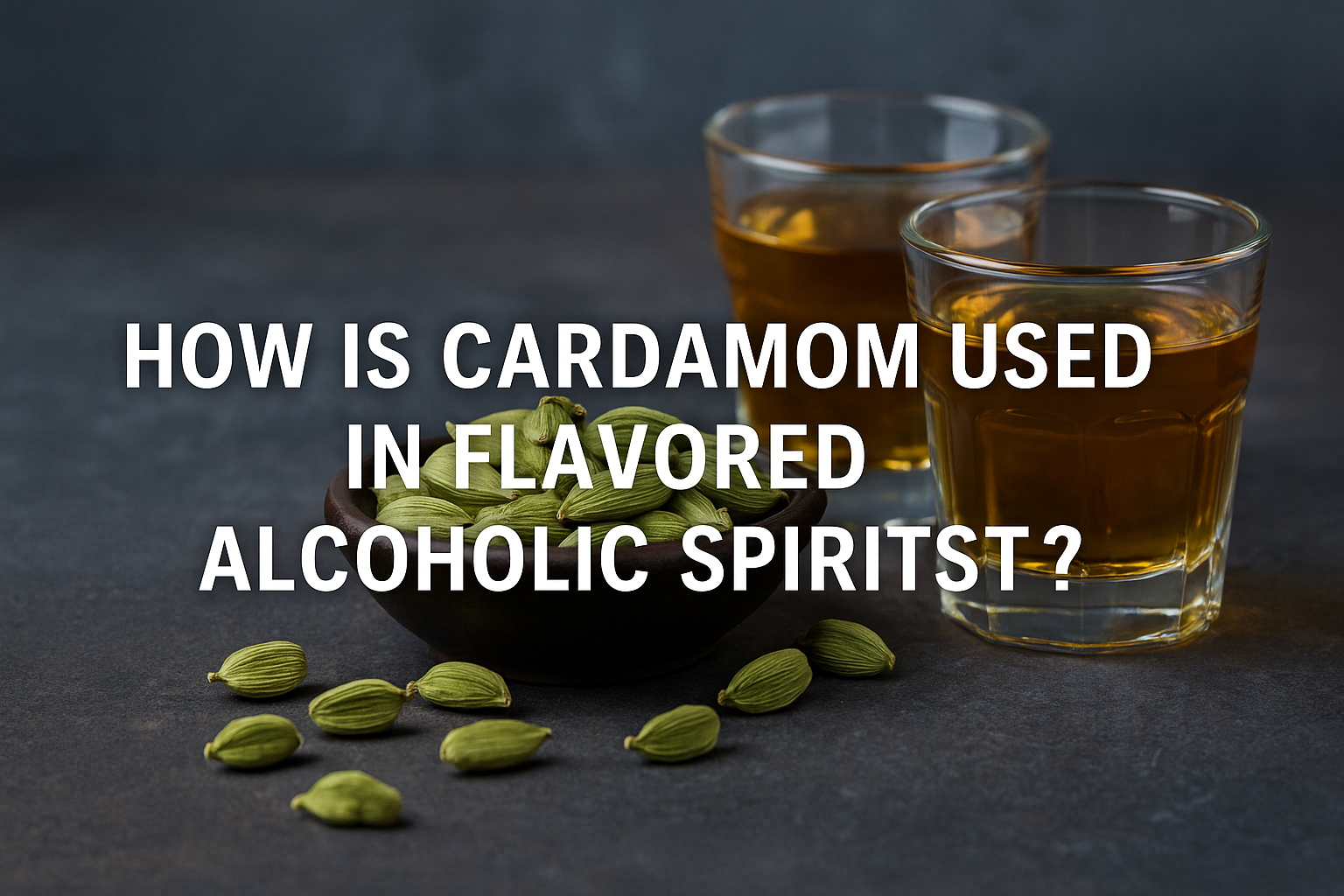
How is cardamom used in flavored alcoholic spirits?
Cardamom is used in flavored alcoholic spirits to add warmth, spice, and aromatic complexity. It’s infused into gin through vapor distillation, steeped in rum and vodka for bold flavor, and blended into liqueurs, bitters, and amari for balance. Distillers use cardamom extracts, syrups, or tinctures in both small-batch and large-scale production, ensuring consistency through standardized flavor controls. Cardamom is also featured in seasonal spirits, regional alcohols like aquavit and arak, and premium artisanal blends, where it’s paired with citrus, vanilla, and pepper to create layered taste profiles.
How is cardamom used in gin distillation to create distinct botanical profiles?
Cardamom plays a crucial role in gin, particularly in premium craft varieties that depend on layered botanical complexity.
- Vapor distillation of cardamom during gin production
Cardamom pods are suspended above the gin base in the distillation column using botanical baskets. As the alcohol vapor passes through, it extracts volatile oils. This method allows for a delicate and clean transfer of cardamom’s signature aroma without over-extraction of bitterness. - Green cardamom preferred for clarity and brightness
Most gin producers choose green cardamom (Elettaria cardamomum) for its citrusy and sweet-spicy character. Its subtle cooling effect complements the juniper-forward base of most gins, adding depth while keeping the profile fresh and balanced. - Used as a secondary botanical for depth
In most gin recipes, cardamom is not the lead note but functions as a secondary or tertiary botanical. It harmonizes with coriander seed, angelica root, and citrus peels to build a structured, layered flavor experience. - Enhances shelf appeal through aromatics
The inclusion of cardamom gives gin a recognizable and luxurious aroma that increases appeal in both neat and mixed formats. The aroma is often cited in tasting notes and marketing materials. - Present in premium global gin brands
Leading products like Bombay Sapphire, Opihr Oriental Spiced Gin, and The Botanist include cardamom in their distillation process. It is also heavily used in small-batch and regional gins that aim for exotic or spiced flavor themes. - Balances floral and herbal elements
Cardamom acts as a bridge between floral elements (like lavender or chamomile) and herbal components (like rosemary or sage), smoothing transitions and rounding out harsh notes. - Improves mixability in cocktails
Gins with cardamom integrate better in cocktails like gin & tonic, negronis, or martinis due to their broader aromatic base. Bartenders often prefer cardamom-forward gins for building aromatic complexity in drinks.
How do producers incorporate cardamom into spiced rum formulations?
Cardamom is widely used in the flavored rum category, particularly in spiced, dark, and aged rums. It contributes both aroma and mouthfeel.
- Infused post-distillation for control
Most rum producers add cardamom during the infusion stage after the base spirit is distilled. This ensures better control over intensity, allowing producers to avoid bitterness while capturing the signature aroma. - Often paired with traditional rum spices
Cardamom is combined with cinnamon, nutmeg, clove, and vanilla to develop the warm spice character typical of spiced rums. The spice blend is aged in steel or oak containers to allow the flavors to meld. - Used in whole pod or crushed form
For deeper flavor extraction, producers may crush cardamom pods to expose the seeds. However, over-crushing can lead to bitterness, so precise particle sizing is often used in commercial production. - Blends well with molasses-based rum
The sweet and robust nature of molasses-based rums balances the peppery and lemony elements of cardamom. This makes the spice ideal for both light and dark rum bases. - Elevates dessert and sipping rums
Rums targeting dessert pairings or neat consumption benefit from cardamom’s smooth heat and lingering finish. It’s also used in coffee-rum blends to enhance mouthfeel. - Integrated into aged rum flavoring
When added during the barrel-aging phase, cardamom softens and gains woody undertones. This is useful in premium rum production, where subtlety and complexity are key. - Appears in premium and mass-market rums
Brands such as Sailor Jerry, Kraken, and various artisanal rum distilleries have embraced cardamom for its appeal in spiced blends.
How is cardamom infused into vodka to achieve premium flavor characteristics?
Vodka’s neutral base makes it ideal for carrying clean spice infusions like cardamom.
- Cold maceration maintains subtlety
Cardamom pods are soaked in vodka at room or cool temperatures for several days. This method avoids over-extraction, ensuring smooth, controlled flavor development without bitterness or harshness. - Hot maceration accelerates flavor extraction
In faster production settings, vodka is heated to 40–60°C before cardamom is introduced. This shortens infusion time but requires close monitoring to avoid undesirable sharpness. - Distilled botanical vodka variations
In premium settings, cardamom is included in a redistillation process to create ultra-clean flavored vodkas. This method captures only the aromatic oils and avoids sediment or cloudiness. - Creates exotic profiles for mixology
Cardamom vodka is used in cocktails such as chai martinis, winter mules, or cardamom lemonade. It provides complexity without overwhelming the drink. - Paired with other botanicals
It is often paired with lemon peel, ginger, and vanilla in multi-note vodka infusions, enhancing its appeal in craft and luxury vodka markets. - Sold as standalone flavored vodka
Brands like Haku (Japan), Absolut, and regional craft distilleries offer cardamom-flavored vodkas to serve both cocktail bars and home mixologists. - Popular in cold climate regions
Scandinavian and Eastern European markets especially favor cardamom vodka during colder months due to its warming spice character.
How is cardamom used to build flavor layers in liqueurs and herbal spirits?
Liqueurs and herbal spirits are ideal formats for capturing cardamom’s multi-dimensional flavor.
- Blended in botanical liqueurs for depth
Cardamom’s floral-citrus aroma adds a fresh top note and smooth warmth in liqueurs like Bénédictine, herbal digestifs, and proprietary house blends. - Used in both clear and cream liqueurs
In clear liqueurs, cardamom remains vibrant and peppery. In cream liqueurs, its spiciness softens and pairs well with dairy-based sweetness. - Macerated for weeks in high-proof alcohol
Cardamom is soaked for 7–21 days in high-proof neutral spirit to ensure full oil extraction. This base is then blended with sugar syrup and other flavorings. - Balances sugar intensity in sweet liqueurs
The spice’s boldness helps reduce the perceived sweetness in sugar-forward liqueurs. It improves palatability for adult tastes by providing aromatic contrast. - Works in both Eastern and Western formulations
Middle Eastern rose liqueurs and Indian spice liquors frequently include cardamom, while Western amaro and aperitifs use it for their herbal blends. - Plays a role in modern mixology products
Artisanal cocktail liqueurs and RTD mixers often include cardamom in their botanical base to differentiate from traditional syrups. - Used in fortified wines and vermouths
Cardamom’s bitterness and citrus notes are sometimes used to sharpen fortified wine-based spirits like sweet vermouths or aromatized wines.
How is cardamom integrated into cocktail bitters and amari in alcohol production?
Cardamom is a functional and aromatic essential in bitter formulations and traditional amari.
- Added during high-proof tincture creation
Green or black cardamom is soaked in alcohol above 50% ABV for several days to create highly concentrated tinctures used by commercial bitters producers. - Balances intense bitter roots and herbs
Its warmth and zest mellow bitter agents like gentian, cinchona, and quassia bark. It brings equilibrium and aromatic lift to otherwise sharp formulas. - Common in global amaro recipes
Cardamom features in Italian amari like Averna and Fernet, adding dimension to digestive spirits. It often works alongside myrrh, saffron, or orange peel. - Used in ultra-concentrated bitters for cocktails
Commercial bitters like Angostura or Peychaud’s contain similar spice blends. Cardamom-forward bitters are also produced in small batches by craft companies. - Supports high-volume commercial scaling
Because cardamom’s oils are potent, a small amount can flavor large volumes. This makes it cost-effective for mass production of bitters or flavor enhancers. - Helps formulate low-ABV aperitifs
In low-alcohol beverages like spritz bases or bitter sodas, cardamom adds complexity without raising bitterness, helping brands comply with new drinking trends.
How do industrial alcohol manufacturers extract cardamom flavor using steam distillation or maceration?
Cardamom flavor extraction for alcoholic spirits relies on two primary industrial methods: steam distillation and maceration, each suited for different spirit types and production goals.
- Steam distillation captures volatile essential oils
In this method, steam passes through green cardamom pods to release volatile compounds. The resulting condensate is separated to isolate cardamom essential oil, which is highly aromatic and ideal for clear spirits like gin and aquavit. It provides a concentrated flavor that retains integrity even in small doses. - Cold maceration preserves delicate notes
Cardamom pods or crushed seeds are soaked in a neutral base alcohol, usually at ambient temperatures. This gentle extraction method allows the retention of citrusy and minty top notes. It’s often used in vodka or liqueur production, where a soft, rounded flavor is desirable. - Hot maceration used for rapid flavor infusion
In high-throughput environments, producers use mild heat (40–60°C) to speed up infusion. The heat accelerates oil release but must be closely monitored to avoid bitterness from over-extraction. Hot maceration is common in flavored rums and bitters. - Supercritical CO₂ extraction used in precision flavoring
Some high-end producers use supercritical carbon dioxide to extract flavor oils from cardamom. This method yields a highly pure extract, free from solvent residues, and is ideal for premium flavored alcohol products with clean-label requirements. - Crushed vs. whole pods used strategically
Crushed pods release flavor more quickly but can introduce unwanted bitterness. Whole pods are preferred when a more subtle infusion is desired. Some producers use a hybrid approach—cracked pods—for controlled intensity. - Solubility tests determine final product application
Before cardamom extracts are blended into spirits, solubility tests are performed to ensure no clouding or sedimentation occurs, especially in clear products like vodka and gin. These tests help maintain product clarity and shelf stability. - Extracts are standardized for batch consistency
To ensure uniform flavor across production runs, distillers use standardized extracts measured by weight and volatile content. This approach reduces variability and enhances flavor predictability at scale.
How does cardamom’s flavor profile behave during barrel aging in whiskey or brandy?
When used in aged spirits like whiskey or brandy, cardamom’s flavor changes significantly over time.
- Initial aromatics soften during aging
Fresh, citrusy top notes in cardamom mellow during the barrel-aging process. Over time, its profile shifts toward warm, resinous, and slightly woody tones that blend harmoniously with oak, smoke, and vanilla notes. - Cardamom pairs well with toasted barrels
Oak barrels that are charred or toasted bring out natural vanillin, caramel, and spice notes. Cardamom complements these characteristics, enhancing the complexity of aged liquors without overpowering them. - Cardamom can be introduced pre- or post-aging
Some distillers add cardamom directly into the barrel to age with the spirit, allowing flavors to meld over months or years. Others infuse cardamom after aging to preserve its brightness and offer a stronger flavor impact. - Used in small quantities for balance
Due to its potency, only a small amount of cardamom is used in aging. Overuse can create an overly medicinal or astringent profile, especially in brandies with high ester content. - Stabilizes over long storage periods
Cardamom’s essential oils are stable in ethanol and do not break down easily over time, making it a reliable spice for long-term barrel projects. It helps add a mature spice backbone to the final blend. - Enhances sipping experience
Whiskey and brandy infused with cardamom are often positioned as sipping spirits. The spice contributes a warming finish that complements slow consumption and complex mouthfeel. - Used in limited-release and craft editions
Barrel-aged cardamom spirits are often released as small-batch, seasonal, or reserve editions, targeting connoisseurs who value depth, tradition, and innovation in one glass.
How is cardamom syrup or tincture used in mixology-ready flavored spirits?
Cardamom is transformed into syrups and tinctures to simplify dosing, enhance consistency, and support product scalability in RTDs (ready-to-drink spirits) and cocktail bases.
- Cardamom syrup used in flavored liqueurs and RTDs
Syrups are made by combining sugar, water, and cardamom extract or infusion. These are added to flavored alcohol bases to create sweet, spiced notes that remain shelf-stable. This is common in chai-flavored liqueurs and winter warmers. - Tinctures deliver high-potency flavor in drops
Tinctures are non-sweetened, alcohol-based extracts of cardamom used in very small quantities. They are ideal for cocktail batching and spirit finishing, where precise spice levels are required without altering ABV or sweetness. - Integrated into mixology concentrates
Commercial drink brands include cardamom in cocktail concentrates—products designed for bars to simplify high-volume service. These concentrates ensure consistency and reduce prep time in fast-paced environments. - Syrup viscosity adjusted for spirit blending
Cardamom syrups are formulated with different sugar ratios depending on the target spirit. For example, thicker syrups are used in cream-based alcohol, while thinner ones suit spritzes and highballs. - Used in pre-batched cocktail bottles
Cardamom extracts and syrups are often added to bottled cocktails (e.g., cardamom margarita or old fashioned) for mass retail. These formulations highlight cardamom as a sophisticated ingredient choice. - Offers consistency in multi-unit operations
Bars, hotel chains, and airline service providers use tinctures and syrups to replicate signature drinks across multiple locations. This eliminates the variability of fresh spice use. - Increases shelf life of spiced flavor offerings
Tinctures, in particular, have long shelf stability, enabling manufacturers to produce large quantities of cardamom-infused bases without spoilage.
How do spirit makers ensure consistency of cardamom flavor in large-batch production?
Consistency is critical in large-scale spirit manufacturing. Cardamom, due to its variability by origin and harvest, requires strict quality management systems.
- Standardized cardamom extracts ensure precision
Manufacturers use standardized extracts (measured in % essential oil or ppm) to control flavor strength across production runs. These extracts offer repeatable performance batch after batch. - Controlled infusion time and temperature
For maceration-based methods, time and temperature are tightly monitored using digital systems. Even minor variations can significantly impact the spice’s balance in the final spirit. - Pre-blended spice concentrates used for scaling
Spice suppliers like us at ABIE Cardamon often deliver pre-mixed cardamom flavor bases ready for integration. These eliminate inconsistencies caused by raw pod infusion or grinding variations. - Regular sensory panel evaluation
Tasting panels are used to benchmark batches against flavor targets. Cardamom notes are assessed for intensity, sharpness, warmth, and harmony with the rest of the spirit base. - Gas chromatography (GC-MS) verifies oil content
Analytical testing ensures each batch of cardamom extract or infusion contains the same concentration of key aroma compounds like cineole and terpinyl acetate. - Homogenization techniques reduce uneven distribution
In high-volume tanks, spirits are agitated and homogenized post-cardamom infusion to ensure even distribution. This prevents flavor layering and maintains taste uniformity from bottle to bottle. - Procurement contracts secure pod uniformity
We work with spirit manufacturers to secure consistent cardamom supply—same grade, same origin, same harvest period—to prevent seasonal or visual differences in batches.
How is high-quality cardamom sourced and quality-controlled for use in alcoholic beverages?
The flavor quality of cardamom used in alcoholic spirits depends entirely on its source, grade, and post-harvest processing. At ABIE Cardamon, we follow strict quality standards to supply alcohol producers worldwide.
- Sourced from trusted farms with consistent yields
We work directly with growers in India, Guatemala, and Sri Lanka to ensure a stable, transparent supply of high-oil-content green cardamom pods suitable for spirit production. - Graded by size, oil content, and moisture level
Cardamom is graded by pod length (6mm+), color (vibrant green), and essential oil yield (minimum 4% v/w). Low-moisture pods are preferred for alcohol infusion to reduce spoilage risk. - Tested for microbial and pesticide residues
All cardamom lots are tested in accredited labs for aflatoxins, microbial load, and pesticide residue. These tests ensure safety compliance with EU, US, and Canadian food-grade standards. - Packaged for freshness and protection
We provide vacuum-sealed and nitrogen-flushed packaging options to preserve freshness during shipping. Our packaging is moisture-proof and UV-protected for extended shelf life. - Custom cuts and forms available for alcohol producers
We supply whole pods, split pods, and coarse-ground cardamom to suit different extraction methods used by distillers and flavor formulators. - Discreet global shipping with full documentation
We offer 24–48 hour delivery within the USA and Canada, and 5–7 days globally, with full COA and phytosanitary certificates upon request. - Guaranteed satisfaction and refund policy
All cardamom shipments come with a 30-day refund or replacement guarantee, ensuring our partners are confident in product quality and consistency.
How do traditional regional spirits like aquavit or arak utilize cardamom as a key ingredient?
Cardamom has been used for centuries in traditional spirits across various cultures, particularly in regional recipes that emphasize botanical heritage and spice-forward profiles.
- Aquavit blends cardamom with traditional herbs
In Scandinavian countries, aquavit is a distilled spirit flavored primarily with caraway or dill. Cardamom is added to create balance and warmth, rounding out the intense herbal notes. It is usually distilled with the base spirit for clarity and integration. - Arak recipes use cardamom to mellow anise
In Middle Eastern arak, which is an anise-based spirit, cardamom is used to soften the sharpness of anise. It also contributes a floral and peppery depth, giving the spirit a smoother mouthfeel and more layered aroma. - Feni and arrack feature cardamom for tradition
Indian feni (a cashew or coconut-based spirit) and Sri Lankan arrack (made from coconut flower sap) sometimes incorporate cardamom in spiced versions. This reflects both Ayurvedic and cultural practices in regional alcohol production. - Cardamom added during or after distillation
Depending on the tradition, cardamom may be added in botanical baskets (pre-distillation) or infused into the final spirit (post-distillation). Each method delivers a different flavor intensity and clarity. - Plays a ceremonial and cultural role
Cardamom’s use in these spirits is not just for taste—it often symbolizes hospitality and refinement. For example, arak with cardamom is traditionally served at weddings and religious feasts. - Boosts shelf stability in hot climates
In warmer regions, where traditional spirits are stored without refrigeration, cardamom’s antimicrobial properties help prevent spoilage and maintain flavor integrity over time. - Used in both home brews and commercial labels
While homemade versions still dominate in many rural areas, commercial producers have modernized these recipes with standardized cardamom infusion techniques for bottled distribution.
How do alcohol formulators pair cardamom with citrus, vanilla, and pepper for balance?
Cardamom’s dynamic flavor profile makes it ideal for complex formulations. It bridges sweet, spicy, citrus, and floral notes, enabling balanced flavor pairings across spirit categories.
- Cardamom and citrus enhance brightness
Limonene-rich botanicals like orange and lemon peel are commonly paired with cardamom in gin, vodka, and liqueurs. Cardamom elevates citrus oils while providing its own lemony-spice undertone, enhancing freshness and balance. - Vanilla softens cardamom’s sharpness
In cream liqueurs or dessert-style spirits, vanilla rounds out the edges of cardamom’s peppery top notes. This pairing is often used in chai liqueurs, eggnog spirits, and winter-themed beverages. - Pepper and cardamom add layered heat
Black pepper adds pungency, while cardamom provides a cooler, resinous spice. The two are used together in modern bitters, infused vodkas, and amaro-style formulations for a more dimensional mouthfeel. - Works well with floral and herbal elements
Lavender, elderflower, and chamomile pair naturally with cardamom in aperitifs and botanical spirits. These combinations help target female consumers and modern health-conscious drinkers seeking floral alternatives. - Helps round off bitter ingredients
In spirits containing gentian, wormwood, or hops, cardamom is used to balance out the bitter elements, allowing for a more palatable finish while preserving complexity. - Used to contrast or support sweetness
Cardamom can sharpen a spirit that’s too sugary or support sweet notes in caramel and honey-based liqueurs. This dual role makes it indispensable in recipe development. - Flavor layering supported by lab trials
Industrial spirit developers use GC-MS analysis and organoleptic panels to test which cardamom pairings work best with other botanicals under varying alcohol concentrations and pH levels.
How is cardamom featured in seasonal or limited-edition flavored alcohol products?
Cardamom’s warming profile makes it a top choice for winter or holiday-themed alcoholic releases, often used in limited batches for festive markets.
- Core spice in holiday gins and vodkas
Many winter-themed gins and vodkas contain cardamom as part of a spice blend with cinnamon, clove, and star anise. These are marketed for seasonal cocktails like mulled gin or spiced martinis. - Used in mulled wine and cider blends
Cardamom is a staple in mulling spice sachets used in fortified wines and hard ciders during autumn and winter months. Its essential oils bloom when heated, enhancing depth and aroma. - Adds complexity to eggnog and cream liqueurs
Seasonal cream-based spirits often include cardamom to offset dairy richness and increase spiced complexity. It’s popular in holiday gift sets and dessert pairing spirits. - Launched in limited-run craft distillations
Craft distilleries use cardamom in experimental or small-batch offerings for limited-time holiday releases. These builds consumer excitement and brand differentiation. - Packaged with themed branding
Spirits with cardamom often feature wintery or culturally festive packaging, with descriptors like “warm spice” or “holiday blend” that appeal to consumers seeking seasonal indulgence. - Supports cross-promotions with seasonal foods
Cardamom-spiced spirits pair well with holiday dishes and desserts, allowing for culinary cross-marketing with restaurants, bakeries, and food product lines. - Enables experimentation in ready-to-drink formats
RTD mulled wines, chai liqueur shots, and spiced spritzes featuring cardamom have gained traction in Q4 product cycles targeting holiday events and gift-giving.
How do producers navigate regulatory and compliance issues when using cardamom in spirits?
Using cardamom in alcoholic beverages requires careful attention to food safety, labeling laws, and export regulations, especially for international distribution.
- Must comply with food-grade regulations
Cardamom used in alcohol must meet international food safety standards. In the U.S., it is recognized as GRAS (Generally Recognized as Safe) by the FDA. In the EU, it falls under Regulation 1334/2008 for natural flavorings. - Labeling depends on extraction method
If cardamom is used as an infusion or tincture, it may be labeled as “natural flavor.” If used as essential oil, especially in spirits like gin, it must be declared appropriately based on jurisdiction. - Export documentation must be thorough
We at ABIE Cardamon supply full Certificates of Analysis (COAs), pesticide residue tests, and phytosanitary certificates with every shipment. These are required for compliance in many importing countries. - Adheres to organic and allergen-free certifications
Many spirit manufacturers request organic-certified or allergen-free cardamom. We provide documentation that meets USDA Organic, EU Organic, and BRC standards when applicable. - Alcohol formulations subject to flavor quotas
Some countries limit the percentage of flavor additives in spirits. Formulators must calculate how much cardamom extract is permissible within ABV and flavor concentration limits. - Shelf stability testing required for commercial blends
Spirits with cardamom must pass stability and separation testing over time to confirm flavor integrity and compliance with beverage safety codes. - Regulatory audits check for traceability
Our supply chain is fully traceable from farm to packaging, which is essential for government and third-party audit readiness.
How is cardamom marketed in premium alcoholic spirits for artisanal and luxury consumers?
Cardamom is often positioned as a rare, exotic, and sophisticated botanical ingredient in luxury spirits, appealing to educated and flavor-conscious consumers.
- Emphasized as an exotic spice on labels
Phrases like “infused with green cardamom” or “notes of Himalayan cardamom” are used on product packaging to communicate authenticity, heritage, and complexity. - Highlights sourcing origin for storytelling
Brands often highlight the origin of cardamom—such as Indian Malabar or Guatemalan Alta Verapaz—to increase perceived value and link the product to sustainable farming or ancient trade routes. - Used in small-batch, handcrafted branding
Craft spirits use cardamom as a hero ingredient in small-batch runs. Labels feature batch numbers, tasting notes, and distiller stories to create intimacy with consumers. - Premium pricing justified by cardamom’s rarity
Cardamom is among the world’s most expensive spices by weight. Its inclusion in alcohol allows producers to command higher shelf prices, especially when blended with saffron, vanilla, or cinnamon. - Used in flavor-forward mixology kits
Premium brands pair their spirits with cocktail kits that feature whole cardamom pods or infused syrups, helping bartenders and consumers recreate curated experiences. - Reinforced by sensory descriptors in marketing
Tasting notes like “aromatic,” “warming spice,” “citrus-mint finish,” or “velvety heat” help communicate the sensory value of cardamom to connoisseurs and casual consumers alike. - Supported by digital and influencer marketing
Social media campaigns often show bartenders using cardamom pods or tinctures in cocktails, building intrigue and visual appeal around the spice.
Cardamom in Alcoholic Spirits: Botanical Distilling at Its Best
Craft distillers use cardamom to flavor gins, liqueurs, and spiced rums. It adds warmth, herbal complexity, and aromatic sophistication. For botanical infusions, buy green cardamom for spirit distillation.
To balance citrus or floral notes in artisanal recipes, get Thai cardamom for small-batch liquor flavoring.
Conclusion
Cardamom has earned its place as a prized ingredient in the flavored spirits industry—from gin distillation and rum infusion to herbal liqueurs and premium vodka. Its versatility, aromatic richness, and cross-cultural appeal make it essential in both traditional and modern alcohol formulations.
At ABIE Cardamon, we provide top-grade cardamom that meets global quality standards for alcohol infusion and flavoring. Whether you’re developing a holiday-themed liqueur, a premium gin, or a ready-to-drink cocktail, our discreet global delivery, full compliance documentation, and satisfaction guarantee ensure you always receive consistent, food-safe, and potent cardamom.
Explore our selection and elevate your next spirit formulation with the trusted quality of ABIE Cardamon—your global cardamom partner.
Raising the Bar: Cardamom in Artisan Spirits
Craft distilleries and mixologists use cardamom to infuse vodka, gin, and bitters with a spicy, aromatic twist. It adds complexity to cocktails and depth to liqueurs. To explore its crossover with health-based drinks, visit How do I use cardamom in a detox drink?—many mocktail recipes use cardamom as a wellness-forward flavor.
For culinary synergy in snacks or pairings, read Should I include cardamom in health food snacks?.
And for dessert beverages, What are some ice cream recipes using cardamom? shows how cardamom bridges savory, sweet, and spirited experiences.