Is cardamom an ingredient in bottled tea drinks?
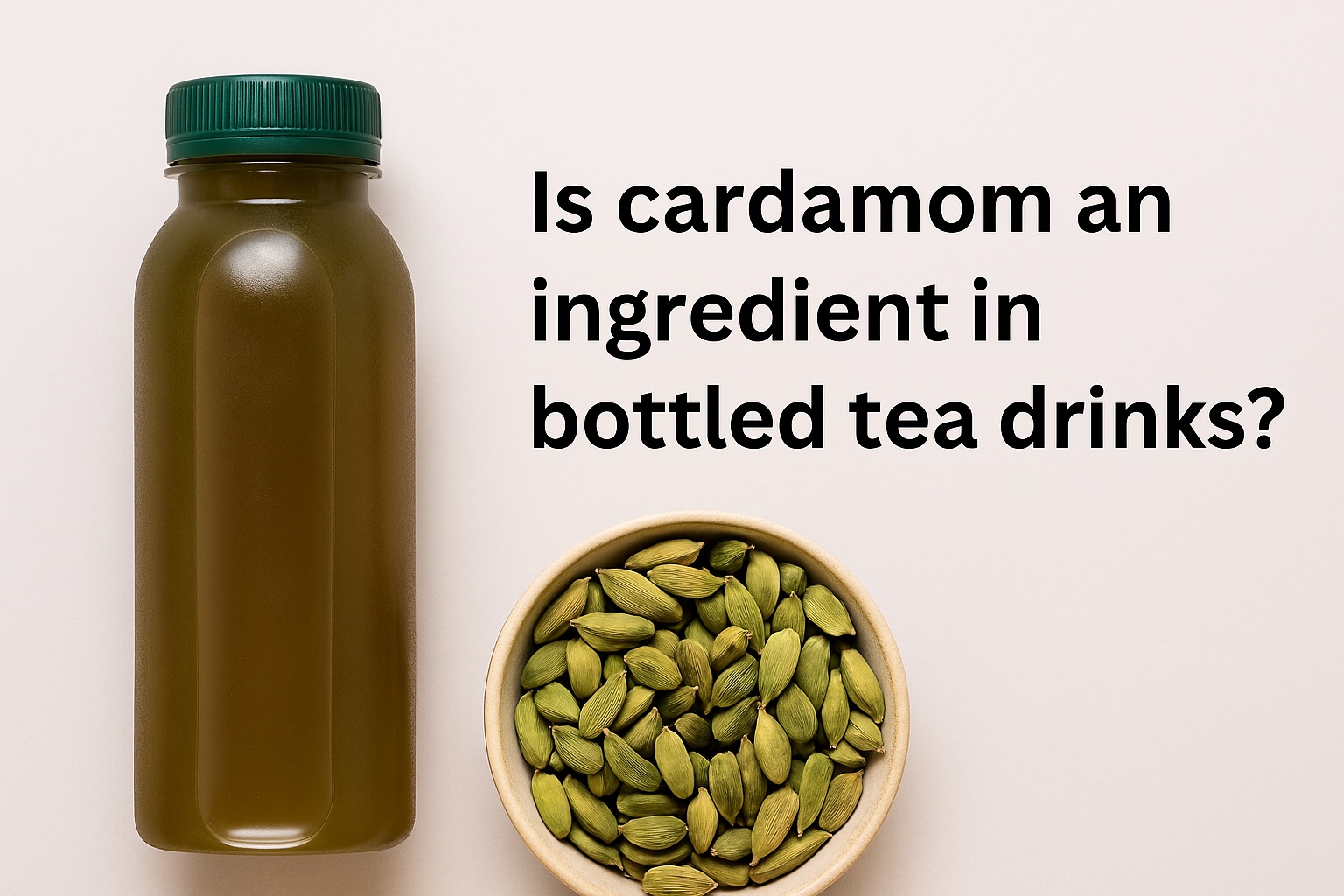
Yes, cardamom is used as an ingredient in many bottled tea drinks, especially in chai, herbal, and wellness-based teas. It is added in the form of essential oil, extract, or ground spice to enhance flavor, aroma, and functional value. Popular brands and boutique labels use cardamom for its digestive benefits, aromatic appeal, and cultural relevance, often pairing it with spices like cinnamon and ginger. Its inclusion helps products stand out in premium and health-conscious markets worldwide.
Which popular bottled tea brands include cardamom in their formulations?
Several established and niche tea brands incorporate cardamom into their bottled products to differentiate their offerings and meet consumer demand for authentic and functional flavors.
- Tazo includes cardamom in its Classic Chai bottled tea.
Tazo’s chai drinks contain a blend of black tea, cardamom, cinnamon, ginger, and vanilla. The spice blend is central to the beverage’s bold and aromatic taste. - Bhakti Chai uses organic cardamom in its micro-brewed bottled teas.
Bhakti’s commitment to clean labels and traditional masala chai includes visible emphasis on cardamom as part of its core spice blend, marketed to health-conscious buyers. - Honest Tea features cardamom in select seasonal or regional blends.
Although not a staple in every SKU, cardamom has appeared in some limited-time offerings and herbal fusion lines. - Teavana (under Starbucks) used cardamom in chai formulations.
While primarily a retail tea brand, Teavana’s pre-bottled products and in-store brewed teas historically emphasized spices like cardamom in their chai profiles. - Private-label brands use cardamom to appeal to niche buyers.
Specialty retailers and boutique brands often formulate small-batch bottled teas using cardamom as a signature ingredient, especially in organic or Ayurveda-themed blends. - Functional beverage brands highlight cardamom for its wellness value.
Brands in the adaptogenic or digestive health space use cardamom to connect with consumers looking for teas that do more than refresh—they support health. - Middle Eastern and South Asian brands often lead with cardamom flavor.
Companies targeting diaspora markets or authentic regional tastes position cardamom-rich tea beverages as traditional yet modern in packaging and delivery. - Some cold brew tea brands integrate cardamom for layered flavor.
In cold-steeped teas, cardamom’s volatile oils add depth without overpowering the mild profile of cold brew tea, making it a subtle yet impactful addition.
How is cardamom used in the production of spiced chai bottled teas?
In chai-based bottled teas, cardamom is a foundational spice. It is processed, extracted, or steeped using methods that ensure flavor consistency and product safety at scale.
- Cardamom pods are steeped with black tea during brewing.
Whole or crushed green cardamom pods are steeped alongside black tea and other spices to extract their flavor in the initial concentrate used for bottling. - Essential oils or oleoresins of cardamom are added during formulation.
Many manufacturers prefer cardamom oil or oleoresin due to its potency and shelf stability. These are measured precisely and incorporated into spice syrups or emulsions. - Cardamom spice blends are pre-mixed for batch brewing.
Spice concentrate bases often contain cardamom pre-balanced with cinnamon, ginger, and clove. These blends streamline production and ensure uniformity across batches. - Cold-fill and hot-fill methods influence how cardamom is added.
In hot-fill methods, cardamom is often part of a cooked concentrate. In cold-fill systems, emulsified cardamom oil is added post-brew under sterile conditions to preserve its aroma. - Powdered cardamom is sometimes used but requires filtration.
Ground cardamom may be added in small-batch artisanal bottled teas. However, it needs effective filtration to prevent residue or sediment, which affects visual clarity. - Emulsifiers may be required when using cardamom oil.
Since essential oils do not dissolve in water-based tea, emulsifiers are added to disperse the cardamom evenly throughout the liquid. - Manufacturers use pasteurization to retain cardamom flavor post-brew.
To preserve the spice profile, pasteurization temperatures are carefully controlled. Overheating can reduce the aromatic intensity of cardamom. - Cardamom concentration is adjusted based on region and audience.
Western markets may prefer subtle spice, while South Asian audiences may expect a stronger cardamom presence, influencing dosing in the formulation stage.
What health benefits are marketed when cardamom is added to bottled teas?
Cardamom is widely used in bottled teas for its functional and therapeutic associations. Beverage brands leverage its natural properties to appeal to wellness-focused consumers.
- Cardamom supports digestive health.
It’s promoted as a carminative, which means it helps relieve bloating and gas. This benefit is often emphasized in detox or digestion-friendly bottled teas. - It has natural antioxidant properties.
Cardamom contains compounds like cineole and limonene that may help neutralize oxidative stress, positioning it as a functional herb in immunity-boosting drinks. - Cardamom is linked to fresh breath and oral health.
Due to its antimicrobial properties, cardamom is marketed in some teas as a breath freshener—particularly appealing in iced teas consumed on the go. - It may support anti-inflammatory responses.
Some studies show that cardamom can reduce markers of inflammation, making it a candidate for teas labeled as anti-inflammatory or stress-reducing. - It is included in stress-relief and relaxation teas.
Cardamom is used in adaptogenic teas alongside ashwagandha or holy basil, with claims related to mood support and balancing the body’s stress response. - Its thermogenic effect aids metabolism in wellness blends.
Some metabolic teas use cardamom for its mild thermogenic properties that may aid digestion and fat metabolism when consumed post-meal. - Cardamom is highlighted in herbal detox tea blends.
Bottled detox teas often include cardamom alongside dandelion or fennel to cleanse the digestive tract, and this benefit is emphasized on packaging and marketing. - It supports Ayurvedic and holistic wellness branding.
Cardamom is a key ingredient in Ayurvedic formulas, giving bottled teas cultural credibility and differentiation in holistic health categories.
Do consumers prefer the flavor of cardamom in ready-to-drink tea products?
Consumer studies and market trends confirm that cardamom adds a flavor profile that is both distinctive and appealing in RTD teas, especially in cultural and functional categories.
- Consumers favor cardamom in chai and masala-inspired drinks.
When buying chai teas, cardamom is not only expected but preferred, as it gives the beverage its signature warmth and complexity. - Taste tests show cardamom enhances perceived authenticity.
Surveys conducted by beverage companies show that cardamom increases consumer perception of product authenticity and traditional value. - Cardamom’s floral-citrus notes balance other spices.
In blends with bold spices like ginger or clove, cardamom provides a lighter, more rounded profile that prevents bitterness. - Cardamom appeals to fans of herbal and spiced teas.
Consumers of herbal RTDs often gravitate toward botanicals. Cardamom is seen as a ‘discovery flavor’ that fits this adventurous palate. - Flavor strength must be carefully controlled.
While appreciated, cardamom must be dosed properly. Excessive spice levels can alienate those new to masala blends, especially in Western markets. - Its flavor performs well in both cold and warm tea profiles.
Cardamom maintains its aromatic quality in both iced teas and shelf-stable warm blends, making it versatile for different seasonal SKUs. - It pairs well with sweeteners like honey or cane sugar.
Cardamom works synergistically with natural sweeteners, enhancing both their sweetness and the tea’s richness without artificial notes. - Consumer reviews often highlight cardamom positively.
Online feedback on bottled teas with cardamom shows high ratings for flavor depth, aroma, and aftertaste, signaling strong market acceptance.
How do manufacturers extract and infuse cardamom flavor into bottled teas?
Manufacturers use various food-grade extraction and infusion techniques to incorporate cardamom flavor into bottled teas while ensuring consistency, safety, and shelf stability. The method chosen depends on product type, batch size, and regulatory needs.
- Steam distillation is used to extract cardamom essential oil.
This process involves passing steam through crushed cardamom pods, capturing volatile oils that carry the pure aroma and flavor. These essential oils are later emulsified and infused into tea bases to deliver strong, clean spice notes. - Supercritical CO₂ extraction yields a solvent-free cardamom extract.
This high-pressure method produces a concentrated and food-safe flavor extract without using chemical solvents. It retains the full spectrum of cardamom’s aromatic compounds and is popular in clean-label formulations. - Crushed or ground cardamom is steeped in the brewing process.
For artisanal or traditional chai-style teas, manufacturers steep ground or whole green cardamom pods with black tea and spices. The infusion extracts both volatile flavor compounds and deeper aromatic resins. - Oleoresins provide a balanced spice profile with shelf stability.
Cardamom oleoresin is a viscous compound containing both essential oil and non-volatile components. It is shelf-stable, easily dosed, and provides a complete flavor profile suitable for large-scale bottling. - Flavor emulsions allow even distribution in cold-fill systems.
When bottling cold or shelf-stable teas, emulsified cardamom oil ensures that the flavor remains evenly suspended without separation, especially in clear beverages where visual consistency matters. - Pre-blended spice concentrates simplify scaling and dosing.
Many manufacturers use premixed spice syrups or concentrates that contain standardized quantities of cardamom. These are designed for high-speed production and avoid batch-to-batch variation. - Infusion timing and temperature impact flavor retention.
Cardamom flavor compounds are sensitive to heat and time. Over-steeping or boiling can degrade flavor. Manufacturers control these parameters to preserve the spice’s subtle floral and citrus notes. - Some manufacturers infuse cardamom post-brew for aroma boost.
A small amount of cardamom oil or extract may be added after brewing to refresh the flavor profile and enhance aroma just before bottling, especially in hot-fill lines where earlier aroma may have dissipated.
What is the difference between using cardamom oil and ground cardamom in bottled teas?
The choice between cardamom oil and ground cardamom in tea production affects flavor intensity, clarity, filtration needs, and overall product stability. Each has specific advantages and limitations based on the intended tea type.
- Cardamom oil is highly concentrated and ideal for scalability.
Cardamom essential oil delivers a strong and consistent flavor with minimal dosage. It’s perfect for high-volume production and ensures uniformity in each batch of bottled tea. - Ground cardamom offers full-spectrum flavor but may cause sediment.
While ground cardamom includes fibrous and resinous parts of the pod, which enrich the flavor, it can leave visible particles or sediment in the beverage, which may be undesirable in clear or shelf-stable bottled teas. - Cardamom oil is easier to emulsify and dose precisely.
In cold-fill or clear teas, oil is preferred because it mixes uniformly with emulsifiers, ensuring a stable product without floating or sinking particles. - Ground cardamom adds body and texture in traditional chai.
For cloudy, dairy-based, or plant-based bottled chai drinks, ground cardamom contributes to the drink’s body and authenticity, especially in traditional masala tea formats. - Cardamom oil is more shelf-stable under varying temperatures.
Essential oil retains its potency longer during distribution and storage. It is less prone to oxidation compared to exposed surface area in ground spice particles. - Ground cardamom requires additional filtration in bottled teas.
Unless intended for rustic or artisanal finishes, ground spice needs to be filtered to meet clarity and mouthfeel expectations, adding processing complexity. - Oil yields a lighter, floral aroma; powder delivers earthier notes.
Cardamom oil captures volatile top notes that give floral brightness, while ground cardamom includes deeper, earthy tones from the seed matrix. - Final choice depends on visual expectations and batch type.
For premium clear teas or teas requiring a longer shelf life, oil is ideal. For fresh-brewed or refrigerated craft blends, ground cardamom may be used to highlight authenticity.
How does cardamom affect the shelf stability of bottled tea beverages?
Cardamom can contribute indirectly to shelf stability through its natural properties but must be supported by broader preservation strategies in commercial tea manufacturing.
- Cardamom contains natural antimicrobial compounds.
Cineole and terpinene, found in cardamom oil, have documented antimicrobial activity. These compounds may help limit bacterial or fungal growth in lightly preserved tea formulations. - Its antioxidant content slows flavor degradation.
Cardamom contains flavonoids and essential oils that combat oxidative spoilage. This helps maintain flavor quality over time, especially when combined with other spices and teas. - Cardamom oil is more stable than ground spice under heat and light.
Essential oil form retains integrity during pasteurization or exposure to sunlight in transparent bottles, supporting longer product life. - It does not replace preservatives but enhances product resilience.
Cardamom alone cannot meet commercial shelf-life requirements. It is used alongside preservatives like citric acid, ascorbic acid, or cold-fill aseptic processing. - Cardamom oil resists rancidity better than some spice extracts.
Unlike fatty spice extracts, cardamom oil is less prone to oxidation or rancid development, keeping the tea’s flavor intact over several months. - It pairs well with sealed and opaque packaging.
To protect aroma and extend shelf life, cardamom-containing teas are best packaged in airtight, light-blocking bottles that minimize volatile oil degradation. - Shelf-stable blends with cardamom are often hot-filled or flash-pasteurized.
These processes ensure microbial safety while preserving the spice’s aroma when time and temperature are controlled properly. - Cold-chain cardamom teas rely on refrigeration for stability.
Some artisanal bottled teas with fresh-brewed cardamom require refrigeration and have a shorter shelf life but deliver superior fresh flavor and authenticity.
Are there any labeling regulations for cardamom as a natural ingredient in tea drinks?
Yes, labeling cardamom in bottled tea drinks is governed by food safety regulations that vary by region. Compliance ensures transparency, traceability, and legal integrity of packaged beverages.
- Cardamom must be listed clearly in the ingredient statement.
If used in its pure form (e.g., ground spice, pods, oil), cardamom must appear on the ingredient list by its common name under FDA, EFSA, or other national labeling standards. - If cardamom is part of a flavor blend, it may appear under ‘natural flavors’.
When used in proprietary spice blends or extracts, cardamom may be labeled as “natural flavor,” provided it complies with flavor labeling regulations and is not misleading. - Organic cardamom requires certified sourcing for label use.
Only cardamom sourced from certified organic farms can be listed as “organic cardamom.” Manufacturers must retain certification documents and submit them during audits. - Allergens are not typically associated with cardamom, but clarity is advised.
Cardamom is not a known allergen, but teas processed in shared facilities must declare potential cross-contamination with allergens like milk, soy, or nuts. - Label placement must follow local jurisdiction formats.
Ingredient listings, nutrition facts, and flavor descriptors must follow font size, placement, and naming conventions as per FDA (USA), FSSAI (India), or EFSA (EU) guidelines. - Flavor claims must reflect actual spice presence.
If “cardamom” appears on the front label or in marketing materials, it must be present in the product in detectable amounts and not just suggested by associated flavors. - Geographic labeling may require origin declaration.
If claiming “Indian cardamom” or “Guatemalan cardamom,” manufacturers must ensure traceability and keep documentation to validate the claim. - ABIE Cardamon provides all sourcing and certification support.
When sourcing from us, we ensure compliance-ready documentation, including CoAs, organic certificates, and ingredient traceability to simplify your labeling process.
How does the cost of cardamom impact bottled tea production pricing?
Cardamom is among the most expensive spices used in commercial food and beverage production, and its inclusion in bottled tea affects both direct costs and final retail pricing.
- Cardamom price fluctuates based on origin and harvest yield.
Prices are influenced by crop conditions in India and Guatemala, which dominate global supply. Poor harvests or geopolitical issues can spike prices sharply. - It is priced higher than other chai spices per kilogram.
Compared to cinnamon, ginger, or clove, green cardamom can cost up to 5–10 times more, significantly increasing formulation costs even at low dosages. - Micro-dosing in teas helps manage cost without sacrificing flavor.
Because cardamom is potent, small amounts (as little as 0.01–0.03%) can be used effectively in bottled tea formulas, helping brands balance flavor and budget. - Bulk purchasing from trusted suppliers reduces cost per unit.
At ABIE Cardamon, we offer tiered pricing, direct origin sourcing, and bulk shipment options that allow tea producers to reduce costs significantly at scale. - Private-label and premium brands absorb higher costs through positioning.
High-end bottled tea brands market cardamom as a luxury spice and use it to justify higher price points, focusing on quality and uniqueness. - Inclusion of cardamom may shift target price tier.
Teas with cardamom are often positioned in premium or functional beverage categories, which allows producers to target higher margins. - Cost increases are offset by consumer perception of value.
Consumers associate cardamom with authenticity and health, often accepting a slight premium in price for what is seen as a superior tea experience. - Using ABIE Cardamon ensures cost efficiency and quality consistency.
We offer dependable cardamom supply chains, overnight delivery, and international shipping support to help beverage companies manage costs and avoid interruptions.
In which global markets are cardamom-flavored bottled teas most popular?
Cardamom-flavored bottled teas are well-received in regions where the spice is culturally rooted or where wellness beverages are in demand. These markets show growing commercial viability for RTD teas featuring cardamom.
- India remains a top market due to cultural familiarity.
In India, cardamom is a staple in household chai. Bottled versions that replicate homemade masala tea are popular among urban commuters and office workers, making India a strong domestic market for cardamom tea beverages. - The Middle East prefers cardamom in both tea and coffee products.
Countries like the UAE, Saudi Arabia, and Qatar incorporate cardamom into traditional beverages. Bottled teas with cardamom gain quick traction in these markets, particularly among younger, health-conscious buyers. - The United States market favors functional and global flavors.
In North America, cardamom is seen as a functional botanical. RTD brands promoting digestion or anti-inflammatory support increasingly include cardamom, especially in organic, fair-trade, or Ayurvedic-positioned teas. - European consumers embrace cardamom for wellness and sophistication.
In countries like Germany, France, and the UK, cardamom is used in artisanal teas that appeal to the wellness and gourmet sectors. Bottled tea brands with clean labels and unique spice blends see premium shelf placement. - Australia and New Zealand show steady growth in spice teas.
Consumers in these regions are adopting global tea trends, especially those influenced by Indian or Middle Eastern spice traditions. Cardamom appears in both domestic brands and imported products. - East Asian markets are slowly integrating cardamom in fusion blends.
While not traditionally part of Japanese or Chinese tea culture, cardamom is appearing in fusion drinks marketed as herbal wellness teas, particularly in urban supermarkets. - Diaspora communities drive demand across global cities.
South Asian and Middle Eastern populations living abroad actively seek authentic spice-infused teas. Bottled teas with cardamom find high uptake in cities like Toronto, London, Dubai, and New York. - Export demand for cardamom tea blends is on the rise.
Brands producing bottled cardamom tea see growth in international markets where exotic, functional beverages are trending. Export partnerships are being established based on cardamom’s global flavor appeal.
Can cardamom be paired with other spices in bottled tea blends for better flavor?
Yes, cardamom is commonly paired with a range of other spices to create complex, well-balanced tea blends that appeal to a broad spectrum of palates. These pairings enhance depth, aroma, and functionality.
- Cardamom and cinnamon create a warm, sweet-spicy profile.
This pairing is foundational in chai teas, where cinnamon’s sweetness balances cardamom’s citrusy sharpness. It’s ideal for comfort teas or winter-themed bottled beverages. - Ginger complements cardamom’s floral intensity with heat.
Cardamom softens the spicy bite of ginger, creating a dynamic contrast that appeals to consumers seeking invigorating, energizing blends. - Clove adds depth and earthiness to cardamom-centric teas.
Clove and cardamom are often combined in masala blends. Clove contributes heavier base notes, while cardamom lifts the aroma, resulting in a rounded flavor profile. - Star anise adds licorice sweetness to cardamom blends.
In gourmet teas, cardamom and star anise are paired to appeal to drinkers who prefer aromatic, layered spice teas. These are often marketed as festive or digestive blends. - Black pepper amplifies cardamom in bold chai formulas.
In masala chai, black pepper’s heat activates cardamom’s aroma. This combination increases flavor intensity and is suitable for strong, milk-based bottled teas. - Nutmeg contributes smoothness and creamy undertones.
Nutmeg pairs well with cardamom in dessert-style or seasonal teas like pumpkin spice chai. It adds warmth without overpowering cardamom’s brightness. - Turmeric and cardamom enhance wellness positioning.
This duo is frequently used in anti-inflammatory teas. Turmeric provides functional benefits, while cardamom enhances drinkability by masking turmeric’s bitterness. - Fennel adds digestive support and a subtle licorice taste.
Cardamom and fennel work well in detox and digestive teas. Their combined properties appeal to consumers focused on gut health and post-meal consumption.
How is cardamom used in functional or wellness-based tea drink formulations?
Cardamom plays a key role in wellness-positioned bottled teas due to its therapeutic properties. Brands often highlight its traditional use and synergistic benefits in modern functional beverage formulations.
- Cardamom is used in digestive teas for post-meal relief.
Known for its carminative effects, cardamom is combined with fennel, ginger, or peppermint in teas marketed to ease bloating, gas, and indigestion. - It appears in detox and cleansing tea formulas.
Cardamom supports kidney and liver function, and is used alongside herbs like dandelion, coriander, or turmeric in bottled detox teas. - Cardamom is a common component in Ayurvedic tea blends.
Based on Vata, Pitta, and Kapha balancing principles, cardamom is classified as a tridoshic spice that soothes and regulates all body types, making it an adaptable ingredient in herbal wellness drinks. - It is included in stress-relief and calming teas.
Cardamom’s soothing aroma contributes to relaxation. It is often formulated with chamomile, tulsi, or lemon balm in teas for stress reduction or sleep support. - It contributes to breath-freshening and oral health-focused teas.
Due to its antimicrobial nature, cardamom is included in teas marketed for mouth freshness, especially those that are unsweetened or lightly flavored. - Cardamom supports metabolic and circulatory function.
Teas promoting weight management or heart health may include cardamom to assist in blood flow regulation and mild thermogenic stimulation. - Functional blends use cardamom to improve palatability.
Many herbs with medicinal properties have bitter or earthy flavors. Cardamom makes these blends more enjoyable, helping improve repeat purchase rates. - It is used in caffeine-free herbal teas for all-day consumption.
Cardamom is caffeine-free and complements rooibos, honeybush, or hibiscus-based bottled teas, offering a flavorful alternative to stimulant beverages.
Do private label or boutique tea brands use cardamom to stand out in the market?
Yes, private label and boutique brands increasingly rely on cardamom to create premium, niche tea offerings. Its exotic appeal, health associations, and versatility make it ideal for market differentiation.
- Cardamom positions the product as artisanal or hand-crafted.
Smaller brands emphasize traditional preparation methods and bold ingredients. Cardamom’s heritage ties and potent aroma support premium branding. - Boutique labels use cardamom in seasonal and limited-edition lines.
Cardamom is featured in winter blends, festive chai, and wellness series as a specialty ingredient, driving exclusivity and urgency to purchase. - Cardamom supports ethnic and cultural product narratives.
Private labels focusing on Indian, Middle Eastern, or African heritage teas use cardamom as a flagship ingredient to tell authentic product stories. - It enhances visual storytelling and packaging design.
Whole cardamom pods are sometimes included in transparent bottles or shown in label illustrations to create sensory connection and visual appeal. - Cardamom is used to target premium retail and eCommerce channels.
High-end stores and curated online tea shops stock cardamom-rich teas for customers seeking elevated, wellness-forward beverages. - Boutique brands partner with trusted suppliers like ABIE Cardamon.
Our team supports small-batch and startup brands by providing fresh, top-grade cardamom in manageable quantities, with discreet delivery and full quality assurance. - Cardamom’s cost justifies premium product pricing.
The spice’s value and sourcing difficulty are leveraged by boutique brands to command higher price points and improve margins. - It strengthens clean-label and organic claims.
Organic cardamom adds credibility to product claims and resonates with label-reading consumers looking for transparency and health benefits.
What challenges exist in sourcing organic cardamom for use in bottled tea drinks?
Sourcing certified organic cardamom involves logistical, regulatory, and supply chain considerations that can affect availability, pricing, and compliance for bottled tea manufacturers.
- Certified organic cardamom is limited in global supply.
Organic farming standards reduce chemical use, leading to smaller harvests. Only a portion of cardamom farms meet USDA, EU, or other organic certification criteria. - Prices for organic cardamom are significantly higher.
Due to limited yield and higher labor inputs, organic cardamom can cost 25–40% more than conventional varieties, impacting formulation costs for tea producers. - Traceability and documentation must be maintained.
To claim “organic cardamom” on a label, manufacturers must source from certified suppliers and maintain clear records for audits and third-party inspections. - Processing and storage facilities must be certified organic.
If cardamom is ground or packaged before being added to tea, the facility handling it must also be certified organic, increasing operational complexity. - Lead times are longer for certified organic bulk orders.
Organic cardamom requires careful handling, which can slow processing and increase transit time. Brands must plan inventory ahead of demand. - There is a higher risk of supply interruptions.
Adverse weather, pest infestations, or market disruptions can affect organic farms disproportionately, leading to inconsistent global availability. - ABIE Cardamon solves sourcing challenges for manufacturers.
We maintain long-standing relationships with certified organic cardamom growers. Our global logistics network ensures on-time delivery, full traceability, and proper documentation. - Switching from conventional to organic may require reformulation.
Organic cardamom sometimes has different flavor intensity or oil content. We assist our clients with sample testing and formulation adjustments when switching.
Cardamom in Bottled Teas: Spice for Health and Flavor
Cardamom is often infused into ready-to-drink herbal teas for its detoxifying and digestive properties. It pairs well with black tea, tulsi, and lemongrass. For blending purposes, buy green cardamom for bottled tea production.
For soft notes in floral or sweet tea lines, shop Thai cardamom for flavored beverage infusions.
Conclusion
Cardamom is a valuable and versatile ingredient in the bottled tea industry. Its flavor, functional benefits, and cultural resonance make it an ideal addition to spiced, herbal, and wellness tea beverages. From sourcing and formulation to branding and consumer appeal, cardamom supports premium positioning and health-oriented product development.
At ABIE Cardamon, we provide premium-quality cardamom that meets both commercial and boutique standards. Whether you’re a large-scale beverage manufacturer or a private label tea brand, we offer:
- Discreet packaging and overnight tracked delivery
- 30-day full refund or replacement guarantee
- 100% customer satisfaction
- 24–48 hour delivery across the USA and Canada
- 5–7 day international shipping
Partner with ABIE Cardamon to bring authenticity, flavor, and consistency to your bottled tea products. Order today and elevate your brand with the finest cardamom available worldwide.
Bottled Brilliance: Cardamom in Ready-to-Drink Teas
Cardamom is a popular flavoring in premium bottled tea beverages. It’s valued for its distinctive aroma and digestive support, often paired with green tea, black tea, or herbal blends. To prepare your own wellness blends, read How do I use cardamom in a detox drink?—a step-by-step guide to homemade functional beverages.
For flavor expansion and pairing, explore Can cardamom mix with coffee for better taste?, which shows its versatility across hot and cold beverage formats.
You can also see Is cardamom useful in sleep aid teas? to understand how it serves both day and night formulas in the RTD (ready-to-drink) market.