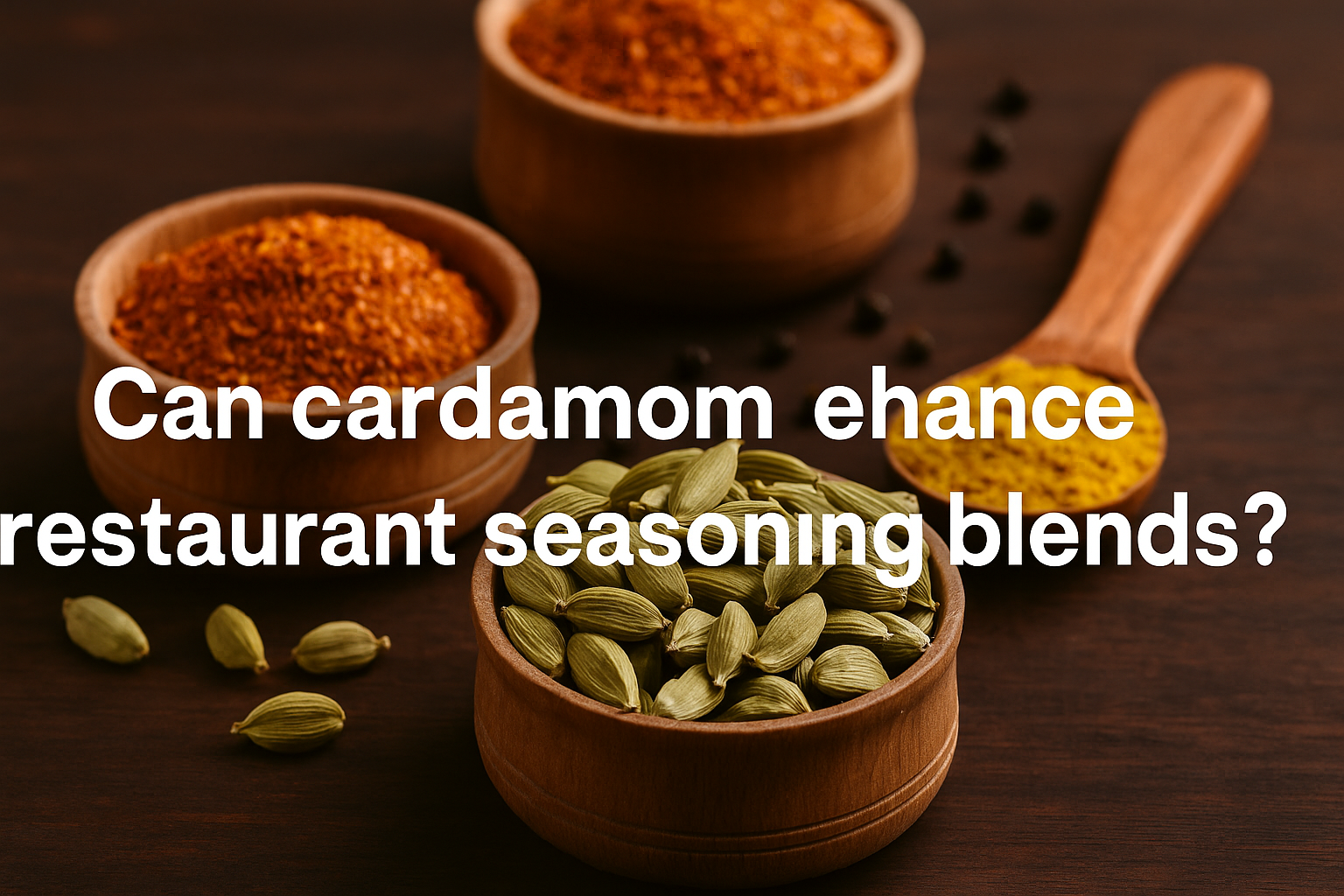
Can cardamom enhance restaurant seasoning blends?
Yes, cardamom can enhance restaurant seasoning blends by adding depth, aroma, and flavor complexity across diverse cuisines. Its essential oils provide a warm, citrusy profile that complements both savory and sweet components. Used in global spice mixes, dry rubs, marinades, and low-sodium formulas, cardamom boosts flavor perception, supports clean-label menus, and helps chefs create signature blends that elevate dish quality and brand identity.
How does cardamom enhance restaurant seasoning blends?
Cardamom enhances restaurant seasoning blends by introducing a bold, aromatic layer that elevates flavor complexity in both dry and liquid applications.
- Balances complex flavors across cuisines
Cardamom bridges sweet, savory, and spicy components, making it suitable for seasoning blends used in global cuisine. Its natural pairing with coriander, cumin, cinnamon, and cloves gives chefs greater flexibility when designing multidimensional flavor profiles. - Enhances both aroma and aftertaste
The essential oils in cardamom—particularly cineole and alpha-terpinyl acetate—provide a strong aromatic lift. This scent carries into the final dish, while its warming, citrusy undertone leaves a lasting impression on the palate after each bite. - Performs well under various cooking conditions
Cardamom’s oils are heat-stable, allowing its aroma and taste to persist through grilling, baking, simmering, or frying. This makes it ideal for seasoning blends used in both pre-cooked and cooked-to-order dishes in restaurant kitchens. - Improves customer taste perception
Cardamom has a perceived sweetness and freshness that can reduce the need for added salt, sugar, or artificial flavors. Restaurants using cardamom in seasoning blends often report increased customer satisfaction with dishes perceived as more natural or gourmet. - Supports both bold and subtle dishes
It can dominate or support, depending on dosage. When used in small quantities, it adds nuance without overpowering. In larger amounts, it can lead a blend’s flavor direction, such as in cardamom-forward curry powders or dry rubs. - Adaptable to both wet and dry seasoning bases
Ground cardamom disperses uniformly in dry rubs, while its extract or infusion blends seamlessly into liquid bases like sauces or marinades. This adaptability makes it a staple in diverse commercial spice product lines. - Used across multiple menu categories
Cardamom works in seasoning blends for proteins (chicken, lamb, tofu), grains (rice, couscous, quinoa), and even beverage garnishes. Its ability to cross categories adds to its value in a busy restaurant prep line.
What are the benefits of using cardamom in restaurant seasoning profiles?
Cardamom offers practical, sensory, and functional benefits that enhance seasoning systems across various dining formats.
- Improves flavor depth and aroma consistency
Cardamom adds top-note brightness and base-note warmth, creating a full-bodied seasoning effect. When used consistently, it helps ensure uniform flavor delivery across all dishes—even in high-volume service environments. - Reduces reliance on synthetic ingredients
Its natural flavor-enhancing properties help minimize the use of MSG, artificial enhancers, or flavor-boosting preservatives. This supports clean-label trends and transparency in restaurant ingredient sourcing. - Extends seasoning shelf life
Due to its antimicrobial and antifungal properties, cardamom helps slow microbial spoilage in pre-mixed seasoning blends. This is particularly beneficial for bulk dry rubs and pre-portioned flavor pouches used in commissary kitchens. - Complements other spices without masking them
Its distinct profile amplifies companion spices like turmeric, ginger, and pepper without dominating. This balancing ability allows chefs to experiment without risking off-flavor combinations. - Contributes to flavor memorability
Cardamom’s unique sensory profile is often unfamiliar yet pleasant to many customers, helping dishes stand out. Its inclusion in a blend can lead to brandable menu items or house specials that differentiate the restaurant. - Adds perceived premium quality to menu items
Because cardamom is a high-value spice, its presence signals quality and sophistication to diners. This perception can support premium pricing strategies for items that use specialty blends. - Performs well across preparation styles
Whether used in dry roasting, oil blooming, or infusion methods, cardamom delivers consistent flavor results. Chefs can manipulate preparation to control aroma intensity and taste concentration in seasoning profiles.
Can cardamom be used to create signature seasoning blends in professional kitchens?
Yes, cardamom serves as a foundation for unique, chef-curated seasoning blends that build restaurant identity and deepen customer loyalty.
- Offers distinct flavor branding potential
Cardamom provides a recognizable but underused note, helping restaurants distinguish their dishes. A “signature blend” with cardamom can become part of a restaurant’s culinary identity, much like a house dressing or custom sauce. - Customizable in ratio and form
Chefs can choose from whole pods, seeds, or finely ground powder depending on the desired texture and flavor release. This control allows precise customization of the blend’s sensory impact. - Scalable for consistent prep across locations
Cardamom blends can be standardized and produced in bulk, making them ideal for restaurant chains and franchises seeking consistency. We supply scalable formulations to maintain flavor uniformity in multi-site operations. - Easily blends with a wide spice range
It integrates well with warm, sweet, and even sharp spices, allowing for flexible blend development. Common companions include smoked paprika, allspice, black pepper, and dried citrus peel. - Supports menu innovation and seasonal rotations
Cardamom-based blends work well in rotating menu items such as limited-time entrees, seasonal soups, or holiday roast rubs. This supports culinary innovation without requiring entirely new inventory. - Can be positioned as allergen-conscious or clean-label
Cardamom is naturally gluten-free and suitable for most dietary preferences. This allows chefs to create seasoning blends that meet rising demand for clean-label and allergen-friendly menu items. - Works across multiple culinary categories
Signature cardamom blends can be used in everything from dipping oils and dressings to chargrilled meats and even beverage garnishes, providing a cohesive flavor theme throughout a menu.
How do fine dining restaurants use cardamom to build complex flavor layers?
Fine dining restaurants use cardamom to construct layered, nuanced flavor experiences that support culinary storytelling and elevated dish design.
- Adds refined top-note aroma
Cardamom’s essential oils release immediately when heated, creating an aromatic introduction that enhances presentation and first-bite impressions. This sensory cue aligns with fine dining’s emphasis on multisensory engagement. - Supports slow flavor development
In sauces and reductions, cardamom contributes subtle heat and warmth that develops over time, adding intrigue to a dish’s flavor evolution from start to finish. - Infused into fats and oils for foundational impact
High-end kitchens often infuse cardamom into clarified butter, cream, or neutral oils. These infusions become the base for emulsions, sauces, and poaching liquids, delivering even flavor dispersion. - Used to contrast or complement hero ingredients
Cardamom pairs well with rich or fatty items like foie gras, duck, and lamb, offering contrast without overpowering. It can also echo sweet notes in root vegetables or winter squash for layered resonance. - Common in modernist and Nordic cuisine
White or green cardamom is frequently used in Scandinavian and New Nordic menus, often paired with dill, smoked fish, or cultured dairy. Its subtle freshness aligns with minimalist, terroir-driven cuisine. - Enhances non-traditional pairings in tasting menus
Fine dining chefs incorporate cardamom in unexpected dishes, such as shellfish broths, herbal consommés, or dessert-like appetizers. These applications create memorable contrast and elevate the guest experience. - Precise micro-dosing for balance
Due to its potency, fine dining chefs often use micro-quantities, carefully measured to avoid domination. This allows cardamom to sit in the background of a dish, supporting complexity without stealing attention.
Can cardamom improve the taste of marinades and rubs in restaurant settings?
Cardamom enhances both the taste and functionality of marinades and rubs by improving absorption, aroma, and post-cook flavor release.
- Infuses aromatics into proteins and vegetables
In liquid marinades, cardamom releases its volatile oils into the acid or fat base, allowing flavors to penetrate meat or vegetable fibers more deeply and evenly. - Neutralizes off-notes and enhances freshness
Cardamom masks unpleasant raw meat odors and adds a clean aromatic touch, especially effective in poultry, lamb, or seafood applications where freshness perception matters. - Improves browning and crust formation
In dry rubs, ground cardamom contributes to Maillard reactions when exposed to high heat, helping develop richly flavored, golden-brown exteriors on grilled or roasted items. - Performs well with both oil- and water-based carriers
Cardamom binds to oils, enhancing flavor dispersion in oil-heavy rubs, but also holds its own in vinegar or yogurt-based marinades commonly used in Middle Eastern or Indian cuisine. - Supports long marination without bitterness
Unlike certain spices that grow bitter or harsh over time, cardamom maintains its sweetness and warmth, even during long resting periods in the cooler. - Enables consistent flavor results
Pre-blended cardamom rubs or marinades ensure consistent seasoning results across multiple portions or prep batches, saving time during high-volume restaurant operations. - Complements bold spice mixes
Whether used with chili, garlic, mustard seed, or tamarind, cardamom offers an anchoring note that prevents overpowering bitterness or heat from dominating.
What global seasoning blends in restaurants commonly include cardamom?
Cardamom is a core component in several traditional and modern global spice blends used across diverse restaurant cuisines.
- Garam masala (India)
In Indian cuisine, cardamom is an essential part of garam masala, used widely in restaurant kitchens for curries, stews, and tandoori marinades. Both green and black cardamom are included depending on the regional variation. Green cardamom adds sweet warmth, while black cardamom offers smokiness and depth. - Baharat (Middle East)
Middle Eastern restaurants use cardamom in baharat, a versatile spice blend applied to lamb, poultry, and rice dishes. The inclusion of cardamom contributes a floral aroma that complements cinnamon, nutmeg, and coriander in the mix. - Berbere (Ethiopia)
Ethiopian dining establishments use cardamom in berbere, a bold blend with chili, fenugreek, and garlic. Cardamom adds balance to the heat and bitterness, especially in slow-cooked meat or lentil dishes such as doro wat. - Hawaij (Yemen)
This Yemeni blend features cardamom along with turmeric, black pepper, and cumin. Used in broths, stews, and coffees in traditional Yemeni restaurants, cardamom provides a warming effect and pairs well with cumin’s earthy tones. - Advieh (Iran)
Cardamom is present in advieh, a Persian blend used in rice and meat dishes. It adds elegance and floral notes that work beautifully in saffron-based recipes served in upscale Persian restaurants. - Ras el hanout (North Africa)
Moroccan and Tunisian cuisines frequently use ras el hanout, where cardamom is included with as many as 30 spices. Cardamom contributes complexity and luxury to tagines and couscous dishes. - Scandinavian spice rubs
In Nordic cuisine, cardamom appears in savory spice rubs for fish or game meats. Fine dining chefs in Scandinavian restaurants value its use for flavor balance in minimalist preparations. - Southeast Asian broths and curry pastes
Vietnamese pho and Thai massaman curry often contain cardamom pods. In these settings, cardamom brings a sweet and menthol-like aroma that balances fish sauce and chili heat.
How does cardamom interact with savory ingredients in commercial spice mixes?
Cardamom is a versatile spice that works synergistically with a wide range of savory components, improving balance, texture, and depth in seasoning systems.
- Mellows harshness of strong spices
In blends containing sharp spices like cloves or mustard seed, cardamom rounds out the edges, preventing bitterness. Its sweetness acts as a softening agent in bold, heavily spiced meat rubs or stew mixes. - Supports umami development in protein seasonings
Cardamom interacts well with garlic and onion powders, contributing to a fuller umami base. This makes it ideal for seasoning ground meat, lentil, or mushroom-based preparations. - Enhances perception of freshness in herbs
When used with oregano, thyme, or basil, cardamom elevates the green notes, making herbaceous blends more vibrant. This is especially useful in Mediterranean restaurant mixes. - Balances acidity in tomato- or citrus-based dishes
Cardamom helps soften the tanginess of lemon, tamarind, or vinegar. As a result, it is commonly used in dressings, chutneys, and tomato-based sauces to bring harmony. - Interacts well with fatty carriers
Cardamom’s volatile oils dissolve efficiently in fats such as ghee, butter, or plant-based oils. In commercial spice mixes intended for sautéing or finishing, this allows consistent flavor delivery. - Lifts earthy ingredients like legumes or root vegetables
It adds dimension to otherwise flat-tasting items like lentils, potatoes, and carrots. Restaurants offering plant-based or vegetarian options often use cardamom to uplift flavor in these dishes. - Functions as a counterpoint to heat
In chili-forward blends, cardamom tones down the harshness of capsaicin without reducing spiciness. This technique is used in Latin and South Asian cuisines to retain heat but smooth delivery.
Is cardamom suitable for use in vegan and plant-based restaurant seasoning lines?
Yes, cardamom is exceptionally well-suited for plant-based seasoning development due to its adaptability, clean label compatibility, and ability to enhance plant-derived ingredients.
- Improves depth in meat-free recipes
Cardamom adds complexity and aromatic top notes to legumes, tofu, tempeh, and jackfruit. This makes plant-based proteins more satisfying and layered in flavor. - Acts as a natural flavor enhancer
Without animal fats or umami-rich ingredients, vegan dishes often need more depth. Cardamom provides a sweet-spicy kick that activates the senses and rounds out mouthfeel. - Supports clean-label product claims
Cardamom is non-GMO, gluten-free, and suitable for all major dietary categories including vegan, paleo, and keto. It’s a clean addition to seasoning blends without requiring chemical modifiers. - Works well in spice blends for plant-based sauces
From coconut-based curries to almond cream dressings, cardamom fits smoothly into sauce seasoning formulas. It adds warmth without overpowering nut or seed flavors. - Balances sweetness in fruit-forward dishes
Cardamom helps manage sugar levels in plant-based dressings or glazes that incorporate ingredients like mango or pineapple. This is useful in vegan menus that combine sweet and savory notes. - Pairs well with common vegan carriers
Cardamom bonds well with olive oil, avocado oil, or even coconut oil, which are frequently used in vegan cooking. This improves flavor dispersion in roasted vegetables or salad toppings. - Supports high-fiber, high-nutrient flavor masking
In whole grain or high-fiber bowls, cardamom helps soften bitterness from kale, quinoa, or legumes. This improves taste and makes nutrient-dense meals more palatable.
What is the flavor impact of using whole vs. ground cardamom in spice blends?
The form of cardamom used in seasoning blends greatly influences flavor strength, dispersion, and application outcome.
- Whole pods offer slow-release flavor
When used whole, cardamom infuses flavor gradually, making it ideal for slow-cooked items like biryani or soups. The pods are often removed before serving to avoid overpowering the dish. - Cracked pods intensify infusion
Slightly cracked cardamom pods release essential oils more readily while still providing slow flavor delivery. These are preferred in stocks or stews in fine dining and ethnic restaurants. - Ground cardamom offers fast and even flavor distribution
In commercial dry rubs or premixed seasonings, ground cardamom ensures uniform flavor. It’s especially useful in spice coatings for meats, baked goods, and snack products. - Finer grinds yield stronger aroma
Micronized or ultra-fine cardamom powder gives more surface area exposure, releasing a potent aroma instantly. Restaurants use this in spice finishes or high-aroma dips. - Whole forms preserve shelf life longer
Whole cardamom retains flavor for 12–18 months under proper storage. Ground cardamom, while convenient, has a shorter life span and must be used quickly to prevent loss of potency. - Texture considerations in blends
Ground cardamom works in spice shakers and sauces, while whole seeds or coarsely crushed forms may be preferred in visual blends for salad toppings or table-seasoning displays. - Flavor layering with dual usage
Some chefs use whole cardamom early in cooking and add ground cardamom just before service to create layered aromatic depth. This dual application strategy is common in Indian, Moroccan, and fusion cuisines.
Does cardamom retain flavor stability in large-batch restaurant seasoning production?
Yes, cardamom maintains its aroma and potency in large-scale seasoning operations when stored and handled correctly.
- Volatile oil content holds under industrial blending
High-quality cardamom contains up to 8% volatile oils. These oils are resilient under mechanical blending, making cardamom suitable for high-speed commercial spice mixers. - Shelf-stable in dry blends
When kept in airtight packaging and stored in cool, dry environments, ground cardamom retains flavor for up to 9 months, and whole pods for up to 18 months. This supports long-term inventory planning. - Compatible with encapsulated flavor systems
In advanced industrial applications, cardamom oils can be encapsulated for timed-release flavoring. This is especially useful in microwave meals or seasoning sachets. - Minimal flavor degradation during storage
Unlike citrus peel or dried herbs, cardamom does not easily oxidize. This means restaurants can pre-mix large quantities of seasoning without sacrificing flavor. - Batch traceability and consistency
At ABIE Cardamon, we ensure every bulk batch is traceable and lab-verified for consistent oil content, color, and moisture—key for maintaining quality across chain restaurant outlets. - Protection from light and humidity extends potency
Cardamom should be stored in UV-blocking containers and low-humidity conditions. We package our cardamom in food-grade, light-resistant bags to ensure it reaches your kitchen at peak potency. - Ideal for seasoning pouches and sachets
Cardamom performs well in portioned seasoning pouches used in commissary-style restaurant models. It maintains strength even in sealed environments over several months.
How cost-effective is cardamom in commercial seasoning formulations?
Cardamom is a high-value spice, but its potent flavor and multipurpose functionality make it cost-effective for restaurant and foodservice operations.
- High aroma impact at low inclusion rates
Cardamom delivers a powerful aroma with minimal usage. Most commercial blends require only 0.5–2% by weight to achieve noticeable flavor enhancement, allowing chefs to stretch a small quantity across many portions. - Reduces reliance on more expensive synthetic flavorings
Because of its natural potency, cardamom can reduce or eliminate the need for artificial flavor enhancers such as maltol or vanillin. This is especially relevant in clean-label or natural product positioning. - Increases menu item value perception
Including cardamom in seasoning blends enhances the premium positioning of dishes. Customers associate it with exotic, sophisticated flavor, justifying higher menu prices for entrées, sauces, and marinades. - Improves seasoning shelf life and reduces waste
Due to its antimicrobial properties, cardamom helps extend the shelf life of dry seasoning blends. Restaurants benefit from reduced spoilage, minimizing loss and preserving product integrity over time. - Enables multi-category usage across dishes
A single investment in bulk cardamom can support blends for meats, grains, soups, and even dessert-like savory items. This versatility maximizes ROI in fast-paced commercial kitchens with dynamic menus. - Can be standardized for chain use
Cardamom-based seasoning blends can be scaled and replicated across multiple outlets, reducing formulation and procurement variability. This ensures uniformity and cost control across regional or national chains. - Wholesale sourcing reduces per-unit cost
At ABIE Cardamon, we supply bulk quantities at competitive rates with verified oil content and freshness. Our discreet packaging and fast delivery reduce overhead and ensure quick integration into production cycles.
Can cardamom serve as a natural flavor booster in low-sodium seasoning blends?
Yes, cardamom effectively enhances flavor in low-sodium formulations by compensating for the lack of salt through aromatic and taste-lifting properties.
- Activates sensory receptors that mimic saltiness
Cardamom stimulates olfactory and taste pathways that amplify flavor perception, giving diners the impression of full seasoning even with reduced salt levels. This is critical for health-conscious or regulated food service environments. - Blends well with other salt-reduction ingredients
Cardamom pairs with potassium chloride, citric acid, and seaweed extract to create balanced low-sodium systems. Its sweet and floral notes mask the metallic or bitter aftertaste of salt replacers. - Used in heart-healthy and institutional menus
Hospitals, senior care facilities, and wellness-focused restaurants use cardamom in salt-restricted recipes to maintain flavor satisfaction. It’s also included in reduced-sodium ethnic spice blends for wider audience appeal. - Improves the palatability of plant-based proteins
Low-sodium dishes often lean on plant proteins, which can taste bland. Cardamom revitalizes these bases, especially when used in conjunction with cumin, garlic powder, or nutritional yeast. - Supports flavor-rich broths and dry rubs
In sodium-restricted broths or dry meat rubs, cardamom provides complexity and warmth without increasing salt content. It becomes especially useful in low-sodium chicken and vegetable stock cubes. - Complies with health and labeling regulations
Cardamom is considered a natural, compliant additive under FDA and EU labeling laws. This helps food manufacturers and restaurants meet clean-label and health certification goals. - Promotes customer loyalty in wellness dining
By maintaining rich, aromatic seasoning in low-sodium meals, cardamom supports flavor satisfaction, improving return visits and positive reviews for health-oriented menus.
How is cardamom used in fusion cuisine seasoning blends in modern restaurants?
Cardamom plays a central role in modern fusion cuisines by blending flavor traditions across regions into new, innovative culinary experiences.
- Bridges Eastern and Western spice systems
Cardamom combines seamlessly with Asian ingredients like soy, miso, and lemongrass as well as Western components like oregano, rosemary, or fennel. This versatility makes it ideal for globalized restaurant menus. - Enhances creative crossover dishes
In dishes like Indian tacos, Korean barbecue wraps, or Moroccan grain bowls, cardamom delivers a signature aromatic twist that links otherwise disconnected ingredients. - Provides cultural familiarity and exotic appeal
For diners unfamiliar with regional cuisine, cardamom offers a friendly, aromatic point of entry. It’s used to introduce flavor complexity without overwhelming the palate in fusion appetizers or mains. - Supports chef-driven flavor experimentation
Chefs use cardamom in spice blends for aiolis, glazes, rice bowls, and even flavored oils to elevate multi-cultural dishes. It adapts well to grilled, roasted, and raw preparations. - Works in fusion beverages and desserts
Cardamom is increasingly used in chai lattes, infused syrups, and cocktail bases. In fusion desserts like Thai custards or cardamom-laced crème brûlée, it bridges spice with sweetness elegantly. - Ideal for fast-casual fusion formats
Restaurants offering customizable fusion meals (e.g., poke bowls, global tacos, noodle boxes) use pre-blended cardamom seasonings for speed, flavor consistency, and menu innovation. - Enhances story-driven menus
Cardamom helps tell the story of cultural convergence. For example, a Middle Eastern-Mexican fusion dish may use cardamom in adobo sauce to reference both cuisines authentically.
Which essential oils in cardamom contribute to its strong aroma in spice mixes?
Cardamom’s distinct aroma comes from several naturally occurring volatile oils, each contributing a specific sensory effect.
- Cineole (Eucalyptol)
Cineole gives cardamom its minty, cooling sensation. It’s responsible for the fresh lift that’s often detected when seasoning blends are first opened or heated during cooking. - Alpha-terpinyl acetate
This is the main compound responsible for cardamom’s sweet and fruity floral note. It brings warmth and elegance to spice blends and is essential for top-note aromatic delivery in dry or liquid mixes. - Linalool
Linalool adds citrusy and slightly woody undertones. It’s particularly useful in balancing spicy or herbal blends and complements other ingredients like ginger or turmeric. - Sabinene and Myrcene
These compounds introduce peppery and slightly resinous notes that contribute to cardamom’s depth, especially in robust blends designed for red meats or stews. - Geraniol and Nerol
These provide faint rose and lemony aromas that play a supporting role in fusion or gourmet restaurant blends, particularly in sauces and dressings. - Stable under moderate heat and low light
When protected from humidity and light, these oils maintain potency for extended periods, even in pre-mixed commercial seasonings. This makes cardamom ideal for use in long-shelf-life blends. - We test and certify essential oil content
At ABIE Cardamon, we verify all our shipments for oil levels using lab-based GC/MS analysis to ensure our restaurant and industrial clients receive potent, fresh material.
Should chain restaurants use pre-blended or custom cardamom-based seasonings?
Both pre-blended and custom seasonings have strategic advantages. The decision depends on the restaurant’s size, consistency goals, and operational structure.
- Pre-blended offers convenience and uniformity
Chain restaurants with multiple locations benefit from pre-blended seasoning mixes with cardamom, as it ensures consistency, minimizes prep errors, and reduces training needs for kitchen staff. - Custom blends support brand identity
Custom-formulated cardamom blends allow restaurants to develop unique flavor signatures that differentiate them in competitive markets. These can be proprietary and used across sauces, rubs, and meal kits. - Pre-blends reduce inventory complexity
Using turnkey blends simplifies supply chain management and minimizes the need to stock multiple individual spices, particularly in franchise models or high-turnover formats. - Custom blends allow allergen and dietary control
Custom formulations can be tailored to exclude allergens, comply with low-sodium targets, or meet kosher, halal, or vegan certification needs. This control can be vital for customer trust and regulatory compliance. - Custom solutions offer flexibility in seasonal menus
Restaurants running seasonal campaigns or rotating specials can work with us to create limited-edition cardamom-based blends that align with new dishes or marketing themes. - We support both options at ABIE Cardamon
We supply pre-mixed restaurant-ready cardamom blends and also offer full customization services with flavor profiling, oil-content matching, and scalable production—all backed by fast global delivery and quality assurance.
Restaurant Seasoning Blends with Cardamom: Elevate Every Dish
Cardamom adds a gourmet twist to spice rubs, curry blends, and house seasonings. It’s a favorite among chefs for its bold but balanced profile. For kitchen use, buy green cardamom for restaurant-grade spice blends.
For subtle aromatics in fine-dining applications, shop Thai cardamom for chef-crafted seasonings.
Conclusion
Cardamom is a dynamic, high-performance spice that significantly enhances restaurant seasoning blends. From fine dining to fast-casual, and from global cuisines to health-focused menus, it adds unmatched depth, aroma, and customer appeal. Whether you’re creating signature rubs, low-sodium solutions, or fusion-inspired mixes, cardamom brings functional and sensory value to every application.
At ABIE Cardamon, we specialize in delivering top-quality cardamom worldwide, offering:
- Discreet, fast shipping with tracking
- 24–48 hr delivery in the USA and Canada
- 5–7 day international delivery
- 100% satisfaction with 30-day refund or replacement
- Bulk pricing and certified oil-content guarantees
Elevate your kitchen operations with premium cardamom that performs consistently in every blend. Partner with ABIE Cardamon—where restaurants trust us for purity, power, and performance.
Gourmet Seasoning with Cardamom: A Culinary Secret
Cardamom elevates house spice blends in high-end restaurants, especially in cuisines that rely on warm, aromatic profiles. It pairs beautifully with black pepper, coriander, and cinnamon for meat rubs, marinades, or signature dry spice mixes. For meat-specific guidance, see What meats pair well with cardamom spice rubs?.
If your restaurant concept includes fusion dishes, read How is cardamom used in fusion cuisine? for tips on modernizing traditional spices.
For dessert seasonings or multi-course menus, explore Can cardamom replace artificial flavoring in cooking?. These culinary resources help chefs build unique, elevated flavor profiles with cardamom