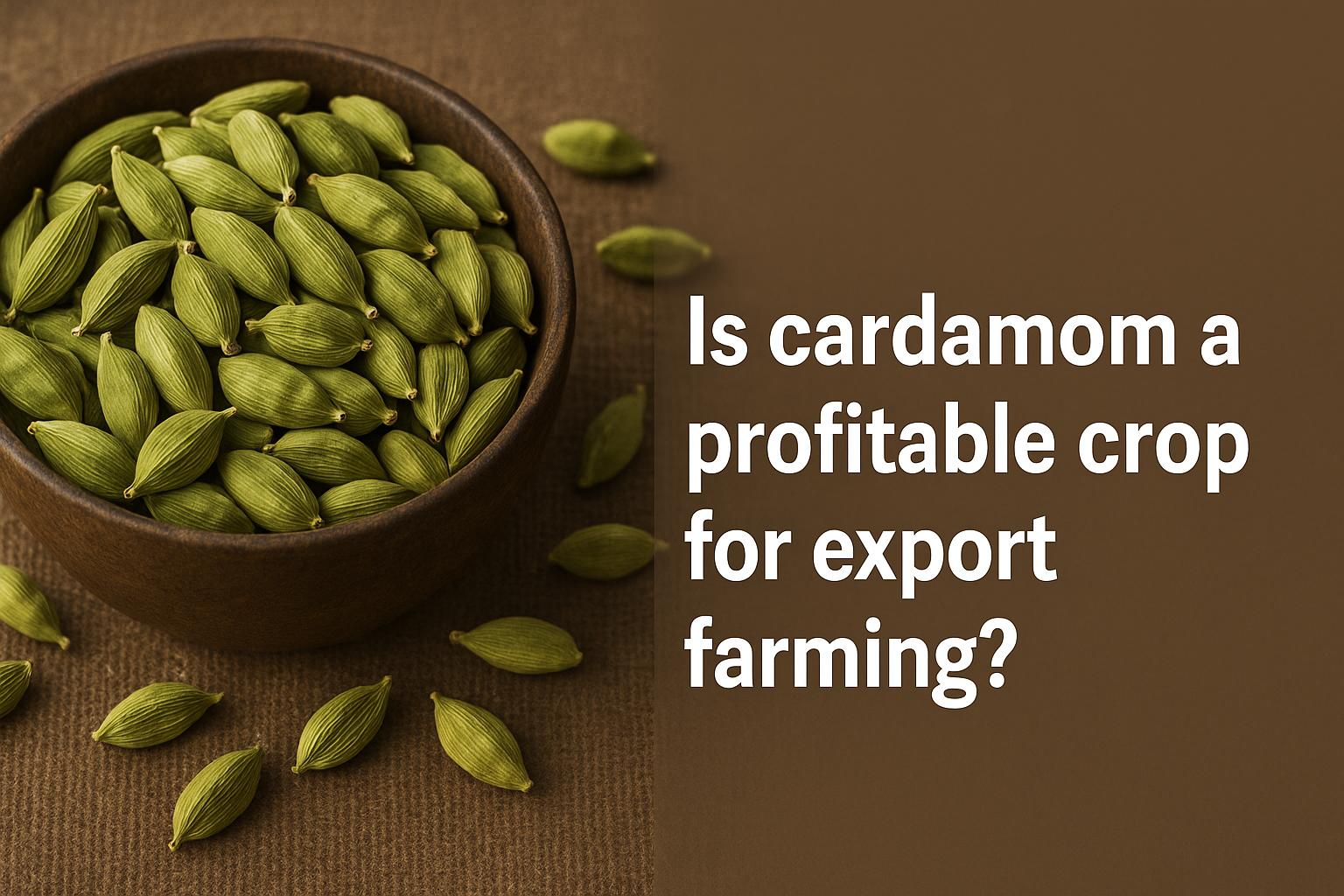
Is cardamom a profitable crop for export farming?
Yes, cardamom is a profitable crop for export farming due to its high market value, strong global demand, and premium pricing in regions like the Middle East, Europe, and North America. Well-managed farms can earn $2,000 to $9,000 per acre annually, especially when meeting export standards through proper harvesting, post-harvest handling, and certifications such as organic or fair trade. With low-volume, high-value returns and growing health-conscious markets, cardamom remains one of the most lucrative spices for long-term export profitability.
What is the profit margin per acre when farming cardamom for export?
Profit margins in cardamom export farming are among the highest in the spice industry, especially under optimal growing conditions and proper post-harvest handling.
- Average Yield per Acre: A well-managed acre of mature cardamom plants can yield 150 to 300 kilograms annually. This yield depends on factors such as plant density, irrigation quality, shade management, and disease control. In high-altitude, tropical regions like Kerala or Guatemala, productivity tends to be more consistent.
- Global Export Price Range: Cardamom fetches between $20 to $40 per kilogram in global markets, with some premium grades exceeding $60/kg. Prices are highest for whole green pods with bright color and strong aroma. These grades are preferred in the Middle East and Europe for cooking and tea blending.
- Gross Revenue Potential: At current international prices, the gross income per acre can range from $3,000 to $12,000 annually. This revenue can double if targeting specialty markets that reward certifications like organic or fair trade.
- Production Costs: Operational expenses, including fertilizers, labor, irrigation, disease management, and harvesting, typically fall between $1,000 and $2,500 per acre. These costs may increase if the farmer uses organic inputs or manual shade regulation systems.
- Net Profit Estimate: After subtracting costs, net profit per acre can vary from $2,000 to $9,000. In regions with subsidized input programs or low labor costs, profitability can be even higher.
- Profit Stability: Unlike many crops, cardamom can generate stable returns for 10 to 15 years, with consistent productivity once plants mature. Regular maintenance and timely harvesting protect income continuity.
- Market Influence: Profit margins rise when farmers engage in direct trade agreements with international buyers. By bypassing intermediaries and selling through export-certified outlets like ABIE Cardamon, growers retain more value.
- Post-Harvest Value Addition: Drying, grading, and vacuum-sealing cardamom before export can increase per-kilo value by 15% to 30%. Value-added steps improve shelf life and meet foreign buyer expectations.
Which countries are the most profitable export markets for cardamom?
Cardamom’s profitability is closely tied to specific international markets that demand premium quality and pay top prices.
- Middle Eastern Markets: Countries like Saudi Arabia, the UAE, and Qatar are the largest importers of cardamom. Green cardamom is used in Arabic coffee, especially during religious and social events. Exporters to these regions can fetch up to 30% more per kilogram, especially during festive periods such as Ramadan and Eid.
- European Union: Markets in Germany, France, and the UK focus on organically certified cardamom and sustainable sourcing. These countries offer high prices for exporters who meet EU organic regulation standards, especially when traceability and residue testing are guaranteed.
- North America: The United States and Canada are high-potential buyers, driven by demand in health food stores, spice brands, and Ayurvedic product companies. Exporters benefit from favorable prices if products meet FDA and USDA compliance standards.
- India: While India is a major producer, it is also a large importer due to internal shortages. Indian buyers often purchase bulk shipments of Guatemalan cardamom at competitive rates, especially during monsoon crop failures.
- Asia-Pacific Region: Countries like Japan, South Korea, and Australia import smaller volumes but pay high prices for aesthetically perfect, food-safe cardamom. Clean-label and allergen-free certifications are critical in this region.
- Price Differentials: Exporters focusing on quality segmentation—such as extra bold, jumbo, or tail-less grades—can target multiple price tiers within a single country, further increasing profitability.
- Trade Relationships: Long-term supply contracts with international food conglomerates and wholesalers reduce income volatility and support predictable cash flow.
- ABIE Cardamon Distribution: We export directly to high-value markets through overnight delivery options, giving buyers worldwide quick access to our top-grade cardamom with full product assurance.
How strong is the global demand for cardamom in the export sector?
Global demand for cardamom has grown steadily due to its unique flavor profile and versatile applications across food, beverage, health, and fragrance sectors.
- Annual Global Consumption: Over 35,000 tons of cardamom are consumed globally each year. Major demand centers include the Middle East, Southeast Asia, Europe, and North America.
- Culinary Uses: Cardamom is a staple in Arabic coffee, Indian sweets, Scandinavian baking, and global spice blends. Its warming, citrusy aroma makes it a favorite in both savory and dessert recipes.
- Health and Wellness Trends: Increasing consumer focus on natural remedies has boosted demand for cardamom in herbal teas, Ayurvedic formulations, and digestive tonics. The spice is marketed as a natural anti-inflammatory and breath freshener.
- Premium Segment Growth: Sales of organic and ethically sourced cardamom have risen sharply in the last five years. Exporters that meet strict sourcing standards see higher order volumes from wellness brands and sustainable grocery chains.
- Seasonal Demand Surges: During cultural and religious festivals in the Middle East and India, cardamom consumption spikes. Exporters who time their shipments ahead of Ramadan, Diwali, and Christmas capture peak prices.
- Limited Global Supply: Only a few countries, notably Guatemala, India, and Sri Lanka, produce exportable quantities. This supply limitation contributes to consistent demand and elevated prices.
- Diversified Buyer Base: Cardamom is now used in craft spirits, flavored gins, and luxury chocolates, adding new export opportunities for creative product manufacturers.
- Long-Term Contracts: Major tea and spice companies are increasingly seeking multi-year supply agreements, rewarding reliable exporters with guaranteed volumes and above-market pricing.
How does cardamom compare to other export crops in terms of profitability?
When compared to other spice crops, cardamom generally yields higher returns per acre due to its value density, consistent demand, and long harvest cycle.
- Versus Black Pepper: While black pepper has wider usage, it sells at a lower price per kilogram. Cardamom earns more per unit and is less susceptible to sudden oversupply shocks.
- Versus Vanilla: Vanilla can be more profitable per kilogram, but it requires labor-intensive hand pollination and has a highly volatile market. Cardamom is more stable and less risky for small farmers.
- Versus Turmeric and Ginger: These are lower-value, high-volume crops with large global supply chains. Cardamom, being premium and rare, offers higher ROI on smaller land areas and involves less bulk logistics.
- Versus Saffron: While saffron is extremely profitable per kilo, it requires cool climates, intensive manual labor, and is cultivated mainly in select regions. Cardamom is better suited to tropical environments and offers broader access for growers.
- Post-Harvest Profitability: Unlike other spices that lose value quickly, properly stored cardamom maintains shelf life and market value for 6 to 12 months, allowing strategic timing for sales.
- Market Entry Barriers: Cardamom requires more specialized handling but once mastered, it faces less pricing pressure and oversupply compared to spices like cumin or coriander.
- Profit Resilience: Cardamom’s ability to sell in multiple grades—whole pods, ground spice, oil extracts—provides more revenue channels than many single-use crops.
- Export Focus: While many spices are sold domestically, cardamom is heavily export-oriented, opening access to stronger currency markets and better foreign exchange returns.
What are the price trends and volatility in the international cardamom market?
The international cardamom market experiences cyclical price changes, but it remains one of the most lucrative spices due to persistent demand and limited supply sources.
- Historical Pricing Range: Cardamom prices fluctuate between $20 and $60 per kilogram, depending on grade, harvest yield, and regional demand cycles. Premium grades see sharper spikes during peak buying seasons.
- Weather Impact on Prices: Crop yield in major growing regions is highly sensitive to rainfall and temperature. Drought or excessive rainfall in places like Kerala or Alta Verapaz leads to reduced supply and sudden price hikes.
- Seasonal Spikes: Prices peak during periods such as Ramadan, Diwali, and Western holidays when international demand surges. Exporters who plan production and shipping ahead of these dates often lock in higher margins.
- Market Intervention: Government policies, including import duties or minimum export pricing, can cause temporary market fluctuations, especially in India and Guatemala.
- Supply Chain Disruptions: Logistics delays, container shortages, or port backlogs can restrict exports, temporarily boosting prices in import-dependent nations.
- Quality Premiums: Bold, green pods with high oil content often command a 30% to 50% premium over mixed-grade or yellowing batches. Exporters with access to post-harvest infrastructure benefit from these price tiers.
- Currency Influence: Currency strength in importing countries (e.g., the U.S. dollar or Euro) can raise or lower real purchase prices, directly impacting exporter profits.
- ABIE Cardamon Pricing Strategy: We monitor international trends and offer stable, export-grade pricing supported by year-round availability and transparent delivery schedules.
What are the startup costs and ROI timeline for a cardamom export farm?
Starting a cardamom export farm involves moderate upfront investment but offers long-term profitability and sustainable income once established.
- Initial Investment Breakdown: Startup costs range between $3,000 to $5,000 per acre, covering land preparation, planting stock, irrigation systems, shade trees, and soil amendments. Farmers also need to invest in pest control, organic matter application, and fencing where necessary.
- Planting Material Costs: Quality rhizomes or seedlings account for about 15% to 20% of startup costs. Using disease-free, high-yielding varieties is essential to ensure long-term productivity and export-grade quality.
- Infrastructure Needs: Establishing basic infrastructure such as drip irrigation, shade netting, and composting units contributes significantly to early-stage costs. Export-focused farms may also invest in on-site drying chambers and grading equipment to meet international quality demands.
- Gestation Period: Cardamom plants require 2 to 3 years to reach full bearing capacity. During this time, income is minimal or non-existent, so capital planning and interim crop intercropping are often advised to manage cash flow.
- Annual Maintenance: After establishment, yearly costs drop to approximately $1,000 to $2,500 per acre, covering labor, pest management, fertilization, and harvesting operations.
- Return on Investment (ROI): Profitable returns begin in year 4 as yields stabilize. By year 5, most well-managed farms break even, and net profits increase steadily thereafter for up to 15 years with consistent management.
- Profit Scaling: ROI increases with access to bulk buyers, certifications, and export channels. By integrating value-added processing and direct marketing through exporters like ABIE Cardamon, producers reduce middlemen costs and improve margins.
- Land Productivity Longevity: Once established, cardamom farms can remain productive for over a decade, offering compounding returns on the initial investment. Proper soil conservation and disease prevention are key to maintaining this longevity.
How do harvesting and post-harvest processing affect cardamom’s export value?
Harvesting and post-harvest processes play a decisive role in determining the market value of cardamom in international trade.
- Timing of Harvest: Cardamom capsules must be harvested at the right maturity stage—fully developed but still green. Early or late harvesting reduces essential oil concentration and compromises pod integrity, leading to price penalties.
- Manual Harvesting Techniques: Harvesting is done manually every 30–40 days during the season, ensuring only ripe pods are collected. Skilled labor ensures minimal damage to pods, which is essential to meet export visual standards.
- Drying Methods: Proper drying is critical to preserve flavor and color. Sun drying is common but must be carefully controlled to avoid bleaching. Hot-air drying at 45°C–50°C is preferred for uniformity and reduced microbial risk. Improper drying leads to mold growth and discoloration, reducing grade and price.
- Grading Standards: Export markets classify cardamom into grades based on size (6mm to 8mm+), color, oil content, and shape. Extra bold grades and uniformly green pods attract 25–50% higher prices.
- Moisture Control: Export-quality cardamom must have moisture content below 12% to prevent fungal contamination and maintain shelf stability. Vacuum packaging is often used to preserve freshness during long shipping durations.
- Storage Practices: Cardamom should be stored in cool, dry, airtight containers away from light and humidity. Exposure to oxygen and light accelerates flavor degradation and oil loss.
- Packaging for Export: International buyers expect clean, contamination-free, and traceable packaging. ABIE Cardamon ensures vacuum-sealed, tamper-proof, export-ready packaging for all shipments.
- Quality Certification Influence: Products that undergo proper post-harvest handling and certification (such as ISO or HACCP) are eligible for high-value markets, especially in Europe, the U.S., and Japan.
What are the climatic and soil requirements to grow export-quality cardamom profitably?
Cardamom cultivation thrives under precise tropical conditions, which directly influence productivity, quality, and profitability.
- Temperature Range: Ideal daytime temperatures are between 10°C and 35°C. Excessive heat or prolonged cold impairs flowering and pod development, while moderate temperatures encourage steady growth and oil accumulation.
- Rainfall Requirements: Cardamom requires 1500 to 4000 mm of well-distributed rainfall annually. It performs best in humid, rainforest-like climates with consistent moisture and moderate cloud cover.
- Shade Levels: Cardamom plants require filtered sunlight under 50% to 70% shade. Natural forest canopy or purposefully planted shade trees like silver oak or gliricidia are often used to mimic ideal understory conditions.
- Soil Type: Well-drained, loamy soils rich in organic matter with pH between 5.5 and 6.5 are most suitable. Heavy clay or waterlogged soils lead to root rot, while sandy soils result in nutrient leaching and reduced yields.
- Altitude Zone: Cardamom grows best at 600 to 1500 meters above sea level. Higher altitudes contribute to superior aroma development and oil retention, both critical for export acceptance.
- Drainage and Slope: Sloped lands with good drainage prevent root diseases, which are common in stagnant water conditions. Raised bed planting can improve drainage in flatter terrains.
- Microclimate Management: Regions with misty mornings, moderate sunlight, and consistent canopy cover yield the highest oil content and pod size, enhancing export value.
- ABIE Cardamon Sourcing Regions: We work with certified farms in high-altitude, eco-friendly zones to guarantee the best climatic and soil conditions for our export-quality cardamom.
What certifications are needed to export cardamom, and do they increase profitability?
Certifications are essential for accessing premium global markets and maximizing profits from cardamom exports.
- Organic Certification: Required for markets in the EU, USA, and Canada, organic certification ensures no synthetic inputs are used in cultivation. Certified organic cardamom fetches 20% to 40% higher prices, especially from health-conscious buyers.
- Fair Trade Certification: Ensures ethical practices in labor and environmental management. Buyers in Europe and North America seek fair trade cardamom for inclusion in sustainable product lines.
- Phytosanitary Certificate: Mandatory for most countries, this certificate confirms that the shipment is free from pests, contaminants, and diseases. Without it, consignments risk rejection at customs.
- ISO 22000 and HACCP Compliance: Required by food manufacturers and spice processors. These certifications prove the cardamom has been handled under safe, hygienic conditions with traceability protocols in place.
- Global GAP Certification: Becoming more important in Europe, this certificate confirms that agricultural practices meet international food safety and environmental sustainability standards.
- Kosher and Halal Certifications: Depending on the target demographic, these may be necessary for buyers in Jewish or Muslim-majority regions. Certification helps access religious retail segments.
- Residue Testing Documentation: Many importers now demand lab tests showing pesticide residue levels below legally allowed thresholds, especially in Japan, Germany, and the USA.
- ABIE Cardamon Certification Standards: We supply certified organic, pesticide-free, and lab-tested cardamom, compliant with major global regulations and delivered with full documentation.
Are there government incentives or subsidies that support cardamom export farming?
Governments in major cardamom-producing countries offer various financial and technical support measures to boost export-driven spice cultivation.
- Export Promotion Schemes: Agencies such as the Spice Board of India or Guatemala’s Ministry of Agriculture offer cash incentives, subsidies for certifications, and rebates on export logistics.
- Subsidies for Organic Farming: Many governments provide financial assistance to switch to organic practices, including free or discounted organic inputs, training, and certification cost-sharing.
- Infrastructure Support: Support for installing drying units, solar dryers, grading machines, and storage units is available in many regions under agri-export programs.
- Low-Interest Loans: Government or cooperative banks offer low-interest, long-term loans to farmers setting up or expanding spice cultivation for export. These are often backed by export boards or ministries of commerce.
- Farmer Training Programs: Technical training in GAP (Good Agricultural Practices), IPM (Integrated Pest Management), and post-harvest handling is provided by local agriculture departments.
- Trade Fair Assistance: Export promotion councils often cover part of the costs for participating in international trade shows, helping exporters secure foreign buyers.
- Transportation Subsidies: In select regions, governments subsidize cold chain logistics and air freight costs, reducing the burden of high export shipping fees.
- ABIE Cardamon Farmer Network: We actively collaborate with farmers who benefit from such government programs, helping them align with export standards and improve long-term profitability.
How do logistics and shipping challenges impact cardamom export profits?
Logistics and shipping play a major role in determining profitability in the cardamom export business. Efficient handling can protect quality, reduce losses, and improve buyer satisfaction.
- Shelf-Life Sensitivity: Cardamom is an aromatic, moisture-sensitive spice. Exposure to humidity or delay during transit can lead to mold, flavor loss, and discoloration—resulting in export rejection or price cuts.
- Packaging Requirements: Export-quality cardamom must be sealed in moisture-proof, airtight packaging—typically vacuum-sealed or nitrogen-flushed pouches—to maintain its aroma, color, and oil content during transit.
- Shipping Method Impact: While sea freight is more economical for bulk orders, it has longer transit times and exposes the product to potential moisture risks. Air freight offers faster delivery and reduced spoilage risk but increases per-unit shipping cost.
- Customs and Documentation: Delays at customs due to missing phytosanitary or origin certificates can hold up deliveries and increase warehouse costs. Accurate and complete documentation is essential to avoid penalties or detainment.
- Cold Chain Logistics: Some exporters invest in temperature-controlled logistics, especially for organic or premium-grade cardamom. This approach ensures consistent quality upon arrival and commands higher prices.
- Freight Cost Fluctuations: Global fuel prices and geopolitical disruptions can cause sudden increases in freight charges, which cut into margins unless export prices are locked in advance.
- Traceable Delivery Systems: Exporters like ABIE Cardamon use trackable shipping systems to offer full transparency to buyers. Our discreet packaging and reliable global logistics ensure on-time delivery and product integrity.
- Delivery Guarantee: At ABIE Cardamon, we guarantee 24 to 48-hour delivery within the USA and Canada, and 5 to 7 business days internationally, helping our customers maintain their inventory cycles smoothly.
Can organic cardamom farming increase profitability in niche export markets?
Yes, organic cardamom farming significantly enhances profitability, especially in premium export segments across North America, Europe, and Asia-Pacific.
- Higher Price Premiums: Certified organic cardamom can fetch 20% to 40% more than conventional varieties. Export buyers, particularly in wellness and gourmet markets, are willing to pay more for organically grown, chemical-free spices.
- Growing Demand: Health-conscious consumers increasingly prefer pesticide-free, environmentally safe products. Organic cardamom appeals to herbal tea brands, natural food stores, and organic spice retailers.
- Market Access Benefits: Countries like Germany, France, Japan, and the United States have dedicated organic food importers. Meeting USDA, EU, or JAS organic certification standards opens doors to exclusive high-paying contracts.
- Sustainability Appeal: Organic farming enhances soil health, reduces runoff, and preserves biodiversity—attributes valued by ethical buyers. Some even offer long-term purchase agreements to certified growers.
- Certification Costs and ROI: While organic certification involves upfront expenses for inspections, conversion, and audits, it results in long-term market stability and better margins.
- Residue-Free Assurance: Export markets often test for chemical residues. Organic practices reduce this risk and increase compliance with Maximum Residue Level (MRL) regulations.
- Retail Labeling Advantages: Organic-labeled products are more marketable and can be branded at luxury price points when accompanied by storytelling about the farm origin and sustainability practices.
- ABIE Cardamon Organic Supply: We offer certified organic cardamom with full traceability and third-party lab testing, serving clients who specialize in organic formulations and clean-label products.
What role does labor cost play in the profitability of cardamom export farming?
Labor costs are a critical component in the economics of cardamom farming, especially since much of the process—from planting to grading—requires manual effort.
- Manual Harvesting Needs: Cardamom is harvested manually, with pickers collecting only ripe pods. On average, labor is needed every 35 to 40 days during the harvest season. Skilled labor ensures quality but increases cost.
- Post-Harvest Sorting: After drying, pods are graded manually based on size, color, shape, and split count. This grading stage is labor-intensive and directly impacts export classification and pricing.
- Labor Availability and Cost Variance: In regions with low-cost labor pools, such as parts of South Asia and Central America, cardamom farming remains profitable. In areas with labor shortages or high wages, mechanization options are limited, affecting margins.
- Seasonal Labor Fluctuation: Labor demand surges during harvest season. Farmers must either retain year-round staff or negotiate seasonal contracts, which can inflate costs if not planned properly.
- Training Investment: Export markets demand high-quality pods, which requires trained labor that understands proper picking, drying, and handling techniques. Well-trained staff reduce product rejection and improve profits.
- Mechanization Limitations: Unlike crops such as maize or wheat, cardamom’s delicate pods and staggered ripening prevent mechanized harvesting, making labor cost unavoidable.
- Profit Retention Through Efficiency: Implementing lean labor models, using co-op networks, and rewarding quality performance can increase efficiency without compromising product quality.
- ABIE Cardamon Grower Support: We train and support our farmer network with best practices in labor productivity, ensuring they meet international quality standards without excessive labor overhead.
What trade agreements or policies affect cardamom export opportunities?
Trade agreements and national policies have a significant influence on how easily and profitably cardamom can be exported to global markets.
- Free Trade Agreements (FTAs): FTAs between producing and consuming countries reduce or eliminate tariffs. For example, India’s trade agreement with the UAE supports duty-free access, enhancing competitiveness.
- Generalized System of Preferences (GSP): Under schemes like EU-GSP+, countries such as Sri Lanka or Guatemala enjoy preferential tariff access to Europe, boosting their export volumes and pricing advantages.
- Export Quotas and Licensing: Some countries regulate the quantity of cardamom that can be exported to stabilize domestic prices. Exporters must comply with export licensing requirements to access these markets.
- Food Safety Regulations: Importers in the EU, Japan, and the USA enforce strict standards on pesticide residues, labeling, and traceability. Non-compliance leads to bans or rejections.
- Sanitary and Phytosanitary Measures (SPS): Countries may require pest risk analysis, fumigation records, and lab testing as part of entry protocols, which can delay or block shipments if not followed.
- Geopolitical Factors: Trade sanctions, civil unrest, or policy shifts in importing countries can disrupt shipping routes or reduce buyer confidence, affecting profitability temporarily.
- Market Access Programs: Many governments offer export insurance, trade finance schemes, and market intelligence tools to help exporters manage international trade risks.
- ABIE Cardamon Export Framework: We comply with all major trade regulations and ensure every shipment is certified, tested, and documented, enabling seamless market entry worldwide.
How do pests and diseases impact the profitability of export-grade cardamom?
Pest infestations and plant diseases can drastically lower yield, reduce pod quality, and result in major economic losses for exporters and growers alike.
- Common Pests: Thrips, borers, and shoot flies attack leaves and developing capsules, leading to deformed pods and reduced oil content. These affect appearance and flavor, both critical in export quality assessment.
- Fungal Diseases: Cardamom is prone to rhizome rot and leaf blight, particularly in poorly drained or over-shaded plantations. These diseases lower productivity and increase replanting costs.
- Quality Downgrade Risks: Infested or diseased pods are often downgraded to lower export grades or rejected entirely. Even small traces of contamination can lead to container rejections at importing ports.
- Economic Loss Estimate: Severe outbreaks can lead to 30–50% yield reduction, directly slashing potential profits. Exporters may also incur testing, quarantine, or destruction charges abroad.
- Preventive Controls: Using Integrated Pest Management (IPM)—including pheromone traps, neem-based sprays, and shade control—can effectively reduce pest incidence without compromising export safety.
- Resistant Varieties: Planting disease-tolerant strains and rotating crops with legumes or turmeric helps reduce pest buildup in soil and improves long-term sustainability.
- Certification Dependencies: Many export markets test for aflatoxins and mycotoxins, which are signs of fungal damage. Maintaining clean, disease-free produce ensures consistent export approvals.
- ABIE Cardamon Quality Assurance: We work closely with our farming partners to implement strict pest control protocols, ensuring our cardamom meets the most rigorous international standards.
Is Cardamom a Profitable Export Crop?
Cardamom is considered one of the most lucrative spice crops for export markets due to its high global demand and price stability. Smallholders and commercial growers alike benefit from its shelf life and diverse uses in food, medicine, and cosmetics. For bulk sourcing and trade-ready supply, buy premium green cardamom for export distribution.
For lighter aromatic varieties ideal for Middle Eastern and Southeast Asian markets, order Thai cardamom for international spice trade.
Conclusion
Cardamom is not only a profitable crop for export farming—it is one of the most consistently rewarding ventures in global spice trade. From high profit margins per acre and access to premium international markets to strong government support and organic market potential, every aspect of cardamom production can be optimized for success. However, profitability depends on meeting strict quality standards, using the right cultivation methods, managing logistics efficiently, and staying compliant with trade policies.
At ABIE Cardamon, we take pride in offering the world’s finest export-grade cardamom with overnight delivery in the USA and Canada, 5–7 day international delivery, discreet packaging, and a 30-day refund or replacement guarantee. Whether you’re an exporter, retailer, or health brand, we ensure that our cardamom delivers unmatched aroma, purity, and reliability—every time.
Export Farming with Cardamom: Is It a Profitable Venture?
Cardamom remains one of the most lucrative spice crops for export farming due to global demand, high market value, and versatile applications in food, health, and cosmetics. If you’re considering starting or scaling a farm, visit How should I manage a cardamom plantation? to learn about cultivation strategies that enhance profitability.
For tips on navigating international markets, read Can I export cardamom to the European Union legally?—a guide to legal, safety, and compliance requirements.
To understand what drives pricing trends, explore What affects global cardamom pricing?. These factors shape profit margins and long-term export potential.