Should I export cardamom in bulk or retail packs?
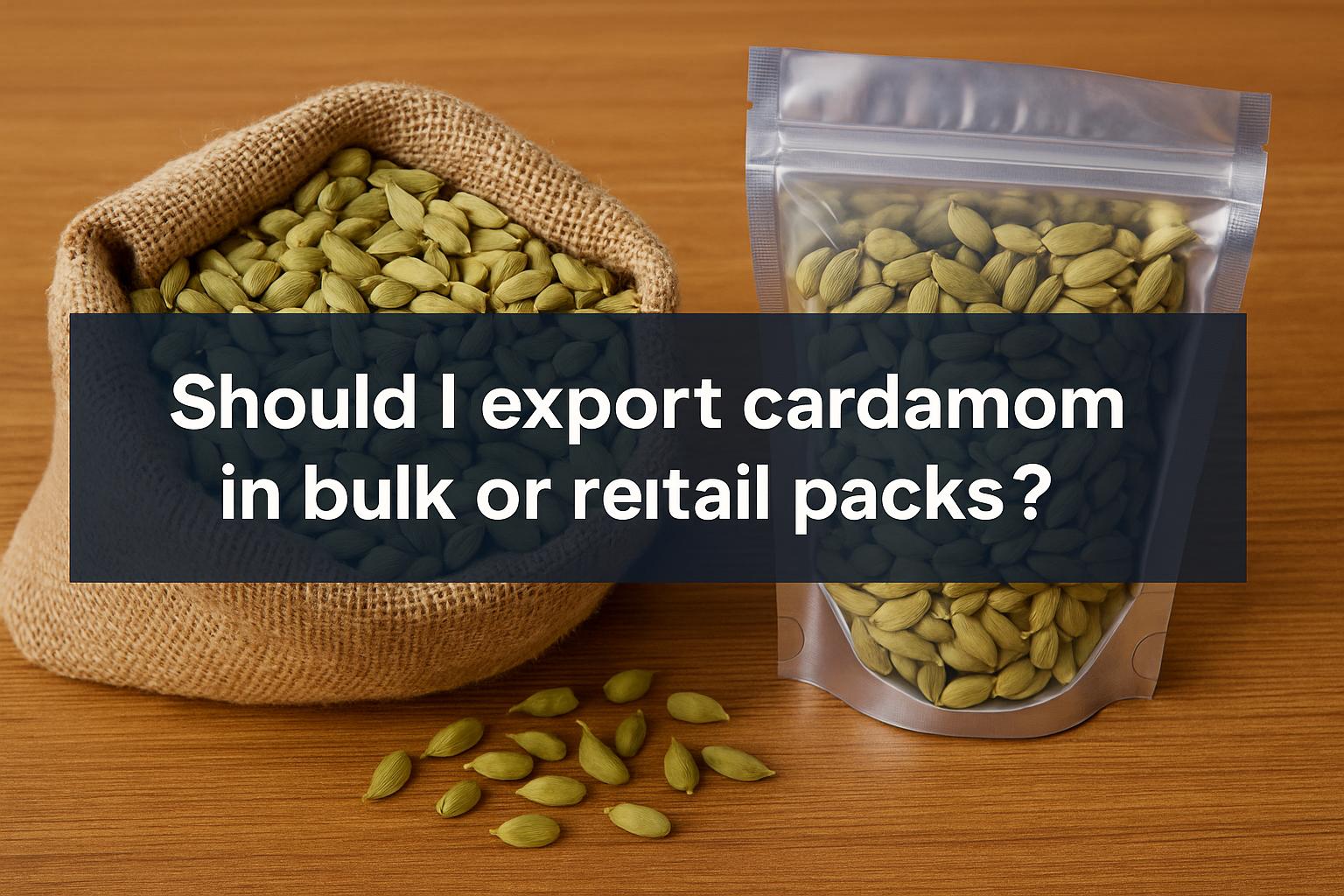
Exporting cardamom in bulk is ideal for high-volume, low-cost trade with wholesalers and processors, offering easier logistics and faster scalability. In contrast, retail packs deliver higher profit margins and brand visibility but require stricter compliance, more packaging investment, and tailored market strategies. Choose bulk for efficiency and volume or retail for premium positioning and long-term consumer growth—your decision should match your target market, infrastructure, and business goals.
What are the key differences between exporting cardamom in bulk and retail packs?
Understanding the core distinctions between bulk and retail cardamom exports is essential for planning a profitable trade strategy. These differences impact pricing, logistics, compliance, and your choice of buyers.
- Target Audience and Market Use
Bulk cardamom is typically intended for large-scale processors, wholesalers, or companies that repackage or use it as an ingredient in other products. Retail packs, on the other hand, are prepared for direct-to-consumer markets like supermarkets, specialty food stores, or e-commerce platforms. - Packaging and Presentation
Bulk cardamom is usually packed in large 25kg–50kg jute or poly-lined sacks with minimal branding. In contrast, retail packs come in small 50g–500g sealed pouches or jars with full branding, ingredient labeling, expiry dates, and barcode identifiers. - Pricing and Cost Structure
While bulk cardamom has a lower per-kilogram sale price, it also carries lower packaging and handling costs. Retail packs allow for higher per-kilogram sale prices due to added branding and presentation, but they demand greater investment in materials and labor. - Regulatory Requirements
Exporting retail packs often triggers more stringent food safety and consumer protection regulations. These include detailed product labeling, allergen information, country-of-origin markings, and traceability standards. Bulk cardamom typically only needs batch and origin information. - Branding Potential
Bulk exports offer limited opportunity to build a consumer-facing brand. Retail packs, however, allow exporters to create brand awareness, engage with end-users, and capture market share by showcasing quality, origin, and certifications. - Storage and Shelf Life Considerations
Bulk cardamom may be more vulnerable to moisture, mold, and aroma loss if not packed with proper liners. Retail packaging generally uses laminated materials with oxygen and moisture barriers, which can significantly preserve flavor and extend shelf life. - Buyer Expectations and Volume Commitments
Bulk buyers expect competitive pricing, consistent volume availability, and minimal packaging. Retail buyers prioritize presentation, retail-ready compliance, and smaller quantities per unit. Each format requires a different sales and logistics approach. - Customs and Handling Efficiency
Bulk shipments are easier to clear through customs with standard documentation. Retail exports often face inspections for compliance with import labeling laws, food safety declarations, and retail packaging certifications.
Which option—bulk or retail packs—offers better profit margins for cardamom exporters?
Profitability depends on multiple variables, including market destination, operational capacity, and investment in branding and compliance. Both formats can be profitable if aligned with a smart strategy.
- Retail Packs Offer Higher Per-Kilo Margins
Exporters can charge a significant markup for cardamom in retail packaging. A kilogram broken into branded 100g pouches may sell for 2–3 times the wholesale price. However, this comes with increased packaging, labor, and compliance costs. - Bulk Exports Rely on Volume Sales
Bulk shipments operate on slimmer margins but enable large-scale transactions. Exporters moving 10+ metric tons at a time benefit from lower transport and handling costs per kilogram, which is ideal for B2B supply chains. - Operational Costs Are Higher in Retail
Packaging machinery, label printing, graphic design, barcoding, and manual labor contribute to retail export costs. While the profit per unit is higher, overhead is also substantial and must be carefully managed. - Risk and Return Profiles Differ
Bulk exports are less exposed to compliance issues but are more sensitive to commodity price fluctuations. Retail exports involve higher risks in packaging compliance and inventory but reward exporters with higher brand visibility and margin. - Access to Premium Markets
Retail packs allow exporters to tap into high-margin markets such as North America, Japan, and Europe, where consumers pay a premium for convenience, traceability, and origin-specific spices. - Value Addition Drives Retail Success
Exporters who roast, clean, or grind cardamom before retail packing further increase product value. This kind of vertical integration boosts margins significantly and allows for brand differentiation. - Packaging Innovation Affects Profitability
Using resealable pouches, eco-packaging, and QR code-enabled traceability can justify higher prices in retail, giving exporters a competitive advantage over generic bulk traders.
How do target market preferences influence whether I should export cardamom in bulk or retail format?
Understanding what your buyers want in each destination market is critical for selecting the right packaging format. Export success depends on aligning supply formats with consumer demand and local trade practices.
- Cultural Usage and Culinary Norms
In South Asian and Middle Eastern markets, cardamom is a household staple used in cooking and tea preparation. Bulk shipments are common in these regions, where repackaging or industrial processing is done locally. - Retail Trends in Western Markets
In countries like the U.S., Canada, and EU nations, consumers prefer convenient, small-sized packs with clear labels and quality assurances. These regions are ideal for retail packs that meet health-conscious and traceability expectations. - Distribution Infrastructure
Bulk exports fit well in regions with established distribution networks and local repackaging industries. Retail packs are more suitable in mature markets with high retail density and robust supermarket chains. - Consumer Trust and Transparency
Retail buyers in developed countries value traceability and certification (e.g., Organic, Fair Trade, Non-GMO). Retail packs allow exporters to communicate this clearly through packaging, creating brand trust. - Price Sensitivity in Target Markets
In price-sensitive markets, bulk shipments are preferred as they lower costs. In premium markets, quality and packaging aesthetics matter more than price, making retail packs more viable. - E-Commerce and Online Sales Channels
Retail packs are ideal for Amazon, Etsy, and other online platforms where individual consumers place small orders. Bulk shipments have limited role in B2C e-commerce unless targeting wholesalers. - Ethnic Grocery Preferences
In diaspora-driven ethnic stores, particularly in North America and the UK, there’s a strong demand for branded 100g or 250g packs with cultural cues, dual-language labeling, and origin-specific claims.
What logistics and freight factors should I consider when choosing between bulk and retail cardamom exports?
Logistics is a major determinant of cost, delivery speed, and packaging efficiency. Choosing between bulk and retail must account for how product volume, weight, and regulatory handling impact transportation.
- Freight Cost per Kilogram
Bulk shipments are more cost-effective per kilogram because they maximize container space and require fewer packaging materials. Retail packs are heavier per unit due to additional materials like plastic, cardboard, and fillers. - Handling and Palletization
Bulk bags are loaded as loose cargo or on pallets and require less manual handling. Retail packs need careful stacking and protective secondary packaging to prevent crushing or damage during transit. - Air Freight vs. Sea Freight
Air freight costs favor bulk due to density and space efficiency. Retail packs, being more voluminous, may incur dimensional weight charges that increase per-unit freight rates substantially. - Storage and Warehousing Efficiency
Bulk sacks are stackable and require minimal shelving. Retail packs need climate-controlled warehouses to maintain freshness and packaging integrity, and more space per kg of product. - Risk of Damage or Spoilage
Retail packs are more susceptible to damage if not properly cushioned. Bulk, though rugged, can face quality degradation if exposed to humidity or pests without lined bags. - Compliance Documentation Requirements
Retail shipments may need more detailed documentation at ports, including product-specific declarations, batch tracking, and labeling checks. Bulk is generally treated as a commodity. - Shipping Container Optimization
A 20-foot container can carry roughly 10–12 tons of bulk cardamom but only 7–9 tons of retail-packed units due to wasted space from individual cartons and air pockets.
How does packaging format impact the shelf life and storage requirements of exported cardamom?
Preserving the quality of cardamom is critical, especially for long-distance exports. Packaging plays a vital role in protecting the spice from oxidation, moisture, and infestation.
- Moisture Control and Sealing
Retail packs use foil-lined, vacuum-sealed, or nitrogen-flushed packaging, which keeps moisture and air out. This significantly slows degradation and mold formation. Bulk sacks, unless lined, are porous and less protective. - Aroma Preservation
Cardamom’s flavor comes from its essential oils, which are highly volatile. Retail packaging with airtight seals retains aroma longer. Bulk packaging can result in significant aroma loss over weeks in transit or storage. - Shelf Life Duration
Properly sealed retail cardamom can maintain peak quality for up to 12–18 months under cool, dry conditions. Bulk cardamom may start to degrade within 6–8 months if not stored properly. - Pest Protection
Laminated retail pouches offer better protection against insects. Bulk bags require fumigation and double lining to deter pests like beetles or moths. - Labeling for Storage Compliance
Retail packs usually carry storage instructions such as “Store in a cool, dry place” or “Avoid sunlight,” which help consumers maintain product integrity. Bulk shipments depend on warehouse practices for quality preservation. - Temperature and Humidity Requirements
Both formats should be kept below 25°C and at relative humidity under 60%. Retail packs are more forgiving in marginal conditions due to sealed packaging. - Warehouse Management Systems
Retail exports benefit from batch-coded inventory and FIFO (First In, First Out) systems that optimize freshness rotation. Bulk systems typically rely on shipment logs and manual tracking.
What type of buyers should I target if I export cardamom in bulk versus retail packs?
Identifying the right buyer segment is critical for successful exports. Bulk and retail cardamom appeal to entirely different business models, and understanding this helps maximize outreach and sales performance.
- Bulk Buyers: Food Processors and Industrial Users
These buyers include spice blending companies, tea manufacturers, herbal medicine producers, and food processing factories. They require large volumes, standardized grades, and competitive pricing for use in production lines. - Distributors and Wholesalers
In many global markets, bulk buyers are importers or distributors who purchase in large quantities to resell locally to repackers or commercial kitchens. They are less concerned with packaging and more focused on consistency and bulk availability. - Retail Buyers: Supermarkets and Grocery Chains
These buyers demand consumer-ready products with proper barcoding, attractive design, and full compliance with food labeling laws. They often require shelf-ready cartons and may ask for private labeling. - Ethnic Grocery Stores and Specialty Shops
Especially in diaspora markets like the UK, U.S., and Canada, these stores often seek small packs of high-quality cardamom that appeal to cultural tastes and cooking traditions. Branding, dual-language labeling, and compact formats are important. - Online Marketplaces and E-commerce Aggregators
These include platforms like Amazon, Flipkart, Etsy, and their fulfillment services. Buyers are typically sourcing smaller volumes but expect uniform packaging, strong shelf appeal, and positive customer reviews. - HORECA (Hotels, Restaurants, Cafes)
Many chefs and kitchen suppliers source mid-size packs (e.g., 500g to 1kg) that balance between bulk efficiency and kitchen convenience. This buyer group often values freshness and aroma preservation over pure pricing. - Pharmaceutical and Herbal Product Companies
Some buyers in the health and wellness industry require premium green cardamom for tinctures, extracts, or health supplements. They seek traceability, organic certification, and pesticide-free quality. - Government and Institutional Buyers
In bulk formats, certain public sector agencies or aid organizations may procure cardamom for food security programs or exports to regulated institutional markets. These buyers are compliance-heavy and expect rigorous quality testing.
Are there different customs and clearance procedures for bulk and retail cardamom exports?
Yes, customs procedures differ significantly between the two formats, primarily due to their intended use and labeling requirements. Retail shipments attract more regulatory scrutiny due to consumer protection laws.
- Label Inspection and Approval
Retail cardamom packs must often comply with destination country labeling regulations, including language requirements, allergen declarations, nutritional panels, and barcode scanning. Customs agents frequently inspect retail labels before release. - Harmonized Tariff Codes (HS Codes)
Both formats fall under similar HS codes (e.g., 0908 for cardamom), but retail packs may require sub-coding based on packaging size or final use, which could affect tariff rates and duties. - Documentation Requirements
Retail exports may need product registrations, health certificates, ingredient disclosures, and test reports. Bulk cardamom usually clears with a phytosanitary certificate, invoice, and certificate of origin. - Import Restrictions or Labeling Bans
Some countries restrict packaging materials (e.g., plastic bans in the EU), which affects retail packs more than bulk. Certain claims like “organic” or “non-GMO” also need pre-verification at customs. - Sampling and Quality Checks
Retail shipments are more likely to be opened and sampled by customs authorities to verify ingredient accuracy and compliance. Bulk shipments are sampled for quality standards like moisture, extraneous matter, and color grading. - Quarantine and Border Control Delays
Retail cardamom can face delays if documentation is incomplete or if products are flagged for testing. Bulk shipments, while faster to process, can be held for fumigation if pests are detected or documents are outdated. - Barcode and Retail Compliance Audits
In markets like Canada, Australia, and the EU, customs may verify whether retail packs are registered with approved barcode systems (e.g., GS1). Incorrect barcodes can lead to rejection or repackaging orders.
How do retail and bulk packaging formats affect my compliance with labeling and food safety regulations?
Retail packaging is subject to far more stringent regulations than bulk shipments, mainly because it is sold directly to end consumers. Mistakes in retail compliance can result in fines, delays, or total shipment rejection.
- Mandatory Labeling Requirements for Retail Packs
These include the product name, net weight, ingredient list (if applicable), country of origin, expiry or best-before date, batch/lot number, allergen warnings, and name/address of the exporter. These must be accurate and visible. - Barcode and Traceability Standards
Retail units require scannable barcodes registered under international systems (e.g., GS1). This ensures product tracking, inventory control, and alignment with retail POS systems in the destination country. - Food Safety Certifications
Retail exporters often must obtain HACCP, ISO 22000, or FSSAI certifications to meet buyer or government standards. These ensure that the cardamom was processed, packed, and handled under sanitary conditions. - Language Compliance
Many countries require that all retail labeling be printed in their official language(s). For example, packaging entering Canada must display both English and French; EU countries require local language labeling. - Retail-Ready Packaging Standards
Beyond food safety, retail packs must be tamper-proof, sealed, and appropriately coded. Packaging must not leak, spill, or degrade under normal handling and shelf conditions. - Prohibited Claims and Labeling Restrictions
Words like “pure,” “natural,” “organic,” or “medicinal” must be backed by appropriate certification or government approval. Misleading labels can lead to seizure or destruction of retail shipments. - Simplified Compliance for Bulk Packaging
Bulk cardamom typically requires basic labeling: product name, net weight, packing date, and origin. As it’s not for direct consumer sale, it’s exempt from many of the strict consumer packaging laws.
What are the branding and marketing advantages of exporting cardamom in retail packs instead of bulk?
Retail packaging creates a direct line between your product and the end customer, opening vast opportunities for brand growth and consumer loyalty. Bulk exports, by contrast, offer little or no branding visibility.
- Direct Brand Exposure to Consumers
Retail packaging allows exporters to introduce their brand into foreign markets. Attractive visuals, storytelling, and design help you compete on shelves or digital marketplaces, which is not possible with bulk sacks. - Premium Pricing Through Value Perception
Well-designed retail packs justify higher prices. Consumers are more willing to pay for elegant, resealable, or environmentally friendly pouches. Design quality directly influences buyer decisions in retail environments. - Traceability and Trust
Retail packaging lets exporters add QR codes or digital links that track the cardamom’s origin, harvest date, and certifications. This transparency builds trust and meets demand for traceable, ethical products. - Product Differentiation
Exporters can create variety through size, flavor (e.g., ground vs. whole), or origin-specific branding (e.g., “Kerala Green Cardamom”). This level of segmentation is not possible in bulk trade. - Market Expansion via Online Channels
Branded retail packs are ideal for e-commerce platforms. With good packaging and customer reviews, your cardamom can reach thousands of new buyers online in countries you’ve never physically visited. - Customer Loyalty and Repeat Purchases
Once a consumer trusts your brand for quality and packaging, they are likely to seek your products again. Consistent branding across packs builds loyalty and increases reorder rates. - Partnership Opportunities with Retailers
Branded retail packs open the door to co-branding, exclusive retail deals, or private label supply contracts with international chains. These partnerships often begin with retail-ready packaging and clear branding.
How does the choice between bulk and retail cardamom export affect quality control and inspections?
Quality control standards vary widely depending on the packaging format. Retail exports face more rigorous checks to ensure each unit meets safety, hygiene, and labeling requirements.
- Uniformity Standards in Retail Packaging
Retail packs require consistent color, size, aroma, and appearance across all units. Consumers expect every pack to look and taste the same, which demands more refined grading and sorting at the source. - Random Sampling vs. Unit Inspection
Bulk shipments are typically inspected by sampling a few sacks to test moisture, volatile oil content, and cleanliness. Retail packs may undergo individual unit checks for seal integrity, label accuracy, and expiration dates. - Packaging Defect Detection
Retail exports are inspected for misprints, faulty seals, and barcode issues. Damaged or misprinted packs may be rejected even if the cardamom quality is excellent, as appearance and safety are crucial in retail. - Laboratory Testing for Residues and Contaminants
Retail cardamom exports may require pesticide residue testing, heavy metal screening, or microbial tests, especially when claiming “organic” or “safe for consumption” status. Bulk exports may bypass some of these tests if destined for industrial processing. - Batch Traceability Systems
Retail packs must carry batch numbers linked to production logs. In case of quality complaints or regulatory audits, exporters must trace every pack back to its processing lot. - Temperature and Humidity Monitoring
Retail supply chains often require full cold-chain compliance or monitoring systems to preserve product integrity. For example, luxury food retailers may demand that cardamom not exceed 25°C during storage and shipping. - In-House vs. Third-Party Inspections
Retail exports often involve third-party inspections by SGS, Intertek, or Bureau Veritas to verify quality and packaging compliance. Bulk shipments may only require internal quality checks unless specified by the buyer.
Which export format—bulk or retail—is more scalable for long-term cardamom trade growth?
Scalability depends on your business goals—volume growth or brand development. Both formats offer scalability, but in different ways.
- Bulk Format Scales Faster in Volume
Bulk exports are easier to scale because they involve fewer units, standardized packaging, and reduced complexity. A single 20-foot container can move up to 12 tons of cardamom with minimal preparation time, ideal for high-volume international orders. - Retail Format Scales Better in Brand Reach
While retail packs scale slower due to packaging and compliance, they enable long-term brand recognition in global markets. Retail presence builds consumer loyalty, opens new distribution channels, and strengthens your brand’s global footprint. - Infrastructure and Capital Investment Influence Growth Path
Exporters with strong logistics, packaging lines, and design capabilities can scale retail operations effectively. Those with minimal infrastructure often scale faster through bulk trading by leveraging third-party handlers. - Geographic Expansion Strategies Differ
Bulk expansion can cover more countries with fewer regulatory barriers. Retail exports require country-specific adaptation (e.g., labeling language, local distributor licenses), which slows entry but creates deeper market penetration. - Automation Supports Retail Scalability
Investing in automatic filling, sealing, and labeling machines can dramatically boost your ability to scale retail output while maintaining consistency and quality. - Regulatory Load Grows with Retail
Scaling retail cardamom exports requires compliance in every market entered. This includes customs registrations, barcoding, food safety approvals, and retail packaging certifications. - Diversification and SKU Creation
Retail formats allow more room for product diversification—e.g., cardamom powder, gift boxes, combo packs—thus offering more SKUs per shipment and increasing total revenue per container.
How do unit economics vary between selling cardamom in bulk versus branded retail packaging?
Unit economics govern profitability, and understanding them helps you choose the most cost-efficient format for your export goals.
- Cost per Kilogram Is Lower in Bulk
Bulk cardamom has fewer packaging and labor costs. A 1kg unit may cost 5–10% less to process and ship compared to its retail counterpart, allowing more aggressive pricing for volume buyers. - Revenue per Kilogram Is Higher in Retail
Retail packs command higher prices per kg. For instance, 1kg of bulk cardamom might sell for $15–$20, whereas ten 100g branded retail pouches can sell for $40–$50, depending on branding and market. - Packaging and Marketing Raise Retail Costs
Label printing, sealing, brand design, barcode registration, and food-grade packaging all add cost. In some markets, these can contribute 30–40% of the final retail unit price. - Labor Intensity Impacts Retail Unit Costs
Retail packing requires more manual input or automation, raising costs. Bulk bags, being simpler, demand less time and reduce unit labor costs significantly. - Storage and Logistics Affect Margins
Retail packs require more shelf space and handling, raising warehousing and shipping costs per unit. However, their higher price points often compensate for this increase. - Defect Rate Risk Is Higher in Retail
Damaged packaging, misprints, or label errors can make entire batches unsellable. Bulk is more forgiving, as minor flaws don’t impact trade as significantly. - Volume Discounts Work Differently
Bulk buyers negotiate lower prices for larger shipments. In retail, pricing is more standardized, but wholesalers and distributors may expect tiered pricing based on order volume.
What are the sustainability implications of exporting cardamom in retail packs compared to bulk?
Sustainability matters more today than ever. Exporters must balance eco-impact with compliance and market expectations.
- Bulk Format Has Lower Packaging Waste
Bulk shipments use fewer materials—typically jute, polypropylene, or lined sacks. These are reusable and generate less waste per kilogram exported, making bulk more eco-efficient. - Retail Packs Generate More Packaging Waste
Retail packaging involves multilayer plastics, laminates, zippers, and sometimes cardboard cartons. These are harder to recycle and increase overall material waste, especially in non-recycling markets. - Eco-Friendly Packaging Adds Retail Appeal
Using compostable, recyclable, or biodegradable packaging in retail exports can attract sustainability-conscious consumers and allow exporters to charge a premium. - Carbon Footprint Is Higher for Retail Packs
More packaging layers, lower container density, and increased freight space per kg contribute to a higher carbon footprint for retail exports. This impacts your overall environmental score. - Sustainability Certifications Create Retail Value
Retail packs that feature eco-labels or carbon-neutral production stamps build trust with environmentally aware customers. These certifications are not typically relevant to bulk trade. - Reusable Bulk Packaging Options
Some exporters use returnable sacks or collaborate with buyers on circular logistics models for bulk cardamom. These reduce waste and lower long-term packaging costs. - Retail Marketing Encourages Responsible Use
Exporters can use packaging real estate to educate consumers about sustainable farming, low-impact harvesting, or recycling methods, creating a positive brand story.
Do I need special licenses or certifications to export cardamom in retail packs?
Yes, retail packs usually require more documentation and certifications than bulk shipments, particularly when selling into regulated consumer markets.
- Food Safety Certifications Are Often Mandatory
For retail exports, you may need HACCP, ISO 22000, or national food safety certificates. These verify that your product meets hygiene, handling, and contamination control standards. - Labeling Approval and Registration
Some countries require label registration before entry. For example, Saudi Arabia and the EU may demand approval for retail packaging designs and nutritional content. - Barcoding and Product Coding Systems
Retail units must be encoded with recognized barcodes (e.g., GS1) that track inventory, verify pricing, and integrate into POS systems in the destination country. - Product Liability Insurance
When selling retail packs directly to consumers, you may be required to carry product liability insurance that covers you in case of food safety claims or recalls. - Organic, Halal, and Fair Trade Certifications
If your retail cardamom is labeled “Organic” or “Halal,” the appropriate certifications must be attached to your shipment. Many buyers and customs authorities will verify these before approval. - Packaging Material Compliance
Some countries ban certain plastics or require specific standards for materials in contact with food. Retail packs must be tested and certified as food-grade. - Import Licenses and Distributor Authorizations
Retail packs often require an import license, especially for food products. Working with an approved local distributor who holds these licenses can simplify the process.
What are the potential risks of exporting cardamom in bulk versus retail packaging formats?
Both formats carry unique risks in international trade. Understanding these helps mitigate losses and maintain quality throughout the supply chain.
- Spoilage and Degradation in Bulk
Bulk cardamom is more exposed to environmental conditions. Without proper liners or warehouse care, it can absorb moisture, leading to mold, odor loss, or color fading. - Regulatory Rejection in Retail
Retail packs are vulnerable to rejection at customs if labels are incorrect, missing, or out of compliance. Even a minor misprint can result in full shipment rejections or fines. - Theft and Tampering Risks
Retail packs, especially those in smaller units, are more prone to theft or tampering during transit or storage. Secure sealing and tamper-proof labels are essential. - Inventory and Storage Complexity
Retail packs require more SKU management and warehousing precision. Damage or confusion between variants (e.g., ground vs. whole) can cause returns or order cancellations. - Consumer Complaints and Recalls
In retail, the end-user has direct access to your brand. If product quality is compromised or packaging fails, complaints and returns can hurt your reputation and incur legal consequences. - Higher Loss Rate During Transit
The outer packaging of retail packs can be damaged more easily during handling. Bulk packaging, while simpler, is more rugged and absorbs rough conditions better. - Currency and Market Price Fluctuations
Bulk shipments are exposed to international price swings. Retail packs are priced per unit and offer some buffer from global pricing volatility, but they may lock you into pricing models that limit flexibility.
Bulk vs. Retail Export of Cardamom: Which is Better?
Bulk export is cost-effective for manufacturers, while retail packaging offers higher margins and branding control. Exporters often diversify with both. For bulk-ready formats, buy green cardamom in wholesale quantities.
For premium retail-focused exports, shop white cardamom for elegant, shelf-ready packaging.
Conclusion
Choosing whether to export cardamom in bulk or retail packs comes down to your goals, market demands, and operational capabilities. Bulk is efficient, cost-effective, and suitable for volume buyers, while retail offers branding potential, higher margins, and consumer loyalty—but requires more investment and compliance.
At ABIE Cardamon, we offer both formats, tailored to your destination market. We ensure fast, discreet global delivery, including 24–48 hour shipping within the USA and Canada, and 5–7 days for international orders. We support you with packaging customization, labeling compliance, and certification guidance to ensure your cardamom arrives fresh, legal, and ready for shelf or wholesale distribution.
With our 30-day replacement or refund guarantee and unwavering commitment to 100% customer satisfaction, you can trust us to help you scale your cardamom export business—whether you’re shipping sacks or shelf-ready packs.
Bulk vs. Retail: Choosing the Right Export Strategy for Cardamom
Exporting cardamom in bulk is efficient for wholesalers and processors, while retail packs suit premium and consumer-ready markets. Your decision should align with buyer preferences, shipping costs, and your branding goals. For packaging tips, read How should I package cardamom for export compliance?—where both options are outlined.
To capture value in niche markets, explore How can I add value to cardamom for export? with formats like infused sachets or branded spice jars.
For region-specific strategy, visit Is there high demand for cardamom in the Middle East?—where bulk and boutique needs often coexist.